


Bed Rails for Elderly People: How to Choose the Right One.

If you or an elderly family member is finding it harder to get in and out of bed safely, a bed rail may provide some extra support and stability. But there are many different types of bed rails available, and choosing the right one is important.
Some are designed primarily to provide a handhold for getting in and out of bed, while others provide a longer barrier along the side of the mattress. The right option depends on the person, their mobility, the bed and mattress being used, and what you need the bed rail to do.
Here are some things to consider before buying a bed rail for an elderly person.
What is a bed rail?
A bed rail is a support fitted alongside a bed.
Depending on its design, a bed rail may help a person:
• reposition themselves in bed
• sit up or move towards the edge of the bed
• feel more stable when getting in or out of bed
• have a secure handhold during a bed transfer
You may also see products described as bed safety rails, bedside rails, bed assist rails, bed sticks or bed support rails. These products can look similar, but they aren't necessarily designed for the same purpose.
What type of bed rail do I need?
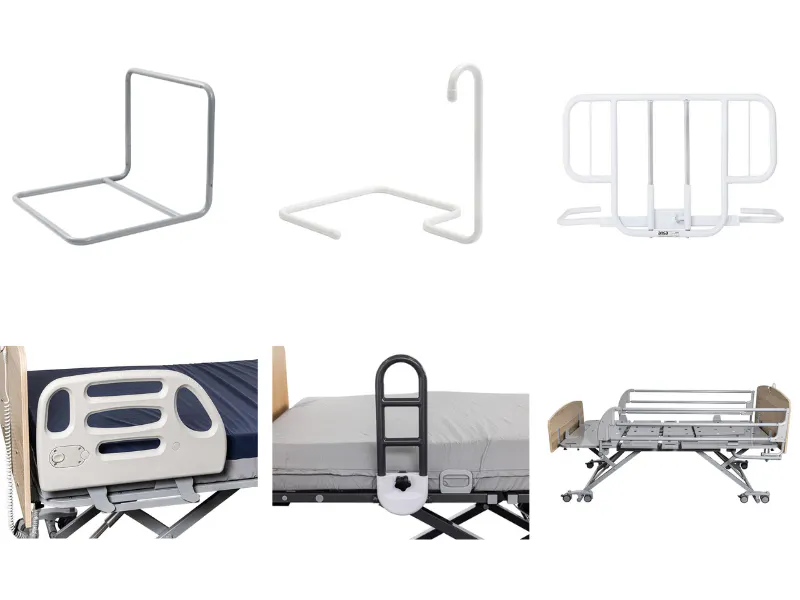
Before buying a bed rail, start by thinking about why the person needs one.
Bed rails for getting in and out of bed
If the main problem is difficulty sitting up, moving to the edge of the mattress or standing from the bed, a shorter bed assist rail may be appropriate. This provides a handhold that the person can use during bed mobility and transfers without creating a barrier along the entire side of the bed.
Bed rails for repositioning in bed
Some people need something secure to hold while turning or repositioning themselves in bed. The position, height and shape of the rail can make a big difference, so it is important to consider how the person actually moves in bed.
Bed rails to prevent someone falling out of bed
This requires much more careful consideration. Bed rails are sometimes used when there is concern about a person rolling or falling from bed. However, they can also introduce risks, including becoming trapped between the rail and mattress or falling from a greater height while attempting to climb over the rail. For this reason, a bed rail shouldn't automatically be considered the safest solution for someone at risk of falling from bed. An occupational therapist or other suitably qualified healthcare professional can help assess the person's individual needs and whether a bed rail or an alternative solution would be more appropriate.
What should I look for when buying a bed rail for an elderly person?
1. Check that it is compatible with the bed
Not every bed rail fits every bed. Before buying, check the type and dimensions of the bed, mattress and bed base. This becomes particularly important with electric and adjustable beds because different sections of the bed move independently.
2. Check the mattress
Consider the mattress height, depth and construction. The relationship between the mattress and rail is particularly important because inappropriate gaps can create an entrapment risk. Don't assume that a rail advertised as fitting a particular bed size will automatically be suitable for your mattress.
3. Think about how the person gets out of bed
Where does the person naturally place their hands?
Do they need support to roll over, sit upright, move their legs over the edge of the mattress or push themselves into standing? A rail positioned correctly for one person may be awkward for another.
4. Consider the length of the rail
Longer isn't necessarily better. A shorter bed rail may provide the handhold someone needs while still allowing them to get in and out of bed easily. Longer rails provide greater coverage along the mattress but can potentially restrict a person's ability to leave the bed.
5. Check how securely the rail attaches
A bed rail needs to remain secure when the person places force through it. Check the manufacturer's instructions carefully, including how the rail attaches to the bed and whether there are restrictions on compatible beds or mattresses.
6. Consider the person's mobility and cognition
A bed rail that works well for one elderly person may create additional risks for another. Particular care is required where a person has reduced cognition, confusion, involuntary movements or may attempt to climb over a rail.
If you're unsure, seek professional advice before purchasing.
Are bed rails safe for elderly people?
Bed rails can be useful for some people, but they are not automatically a fall-prevention solution. Potential risks can include entrapment between the mattress and rail, injury from contact with the rail, or a more serious fall if someone attempts to climb over it. In some circumstances, a bed rail can also be considered a restrictive practice if it prevents a person from freely getting out of bed. That's why the individual person, their mobility, their bed and the intended purpose of the rail all need to be considered. For someone with complex mobility, cognitive or falls-related needs, consider speaking with an occupational therapist or other appropriate healthcare professional before choosing a bed rail.
What are the alternatives to a bed rail?
Sometimes a bed rail isn't the best solution.
Depending on the person's needs, alternatives may include:
• an adjustable-height bed
• a floorline or low bed
• changes to the mattress
• other bed transfer aids
• changes to the surrounding bedroom environment
• falls prevention equipment
• assistance with transfers
The best solution depends on what is making bed mobility or transfers difficult in the first place.
Where can I buy a bed rail for an elderly person?
Unicare Health supplies a range of bed rails, bed support rails and bedroom safety equipment for elderly people across Australia. Whether you’re looking for a simple support rail to help with getting in and out of bed, or need a more specialised solution, choosing the right bed rail is important. If you’re working with an occupational therapist, they’re often the best person to help assess your individual needs and recommend a suitable option.
Before you buy a bed rail online, always check that it is suitable for your bed, mattress and individual needs. Ask for advice and, whenever possible, trial the bed rail before you buy it. This can help make sure the rail provides the support you need, is safe and suitable for its intended use, and is appropriate for your particular bed setup.


