What Is the Optimal Seat Tilt and Backrest Recline Angle for Safe Patient Transport in a Treatment Recliner Chair?

The Comfort and Safety, of a person, while transporting in a hospital type treatment recliner chair is an area where ergonomics and clinical guidelines meet.
In the following detail, we break it down into seat angle, backrest recline, and clinical considerations considering comfort and safety.
- Seat Angle (Tilt)
- Upright transport chairs typically use a slight backward tilt of 5–15° in the seat pan.
- This prevents the patient from sliding forward.
- It also reduces shear forces, which is particularly important for patients at risk of pressure injuries.
- For bariatric or frail patients, a slightly deeper tilt (closer to 15°) improves security during movement.
- Upright transport chairs typically use a slight backward tilt of 5–15° in the seat pan.
- Backrest Recline
- Comfort range for transport: 95–110° from the seat base.
- 95–100°: feels upright but supportive, good for short transport.
- 105–110°: a more relaxed recline that reduces spinal load and increases comfort for longer journeys.
- In clinical practice:
- Too upright (<90°) can feel unstable and tiring, especially for weak patients.
- Too reclined (>120°) can impair breathing, especially for elderly or cardiopulmonary patients.
- Comfort range for transport: 95–110° from the seat base.
- Clinical Considerations
- Posture & Safety: Seat angle and recline should minimize the risk of sliding, promote midline posture, and keep the pelvis stable.
- Respiratory Function: For patients with respiratory issues, a recline beyond 110° can sometimes reduce lung expansion — balance is key.
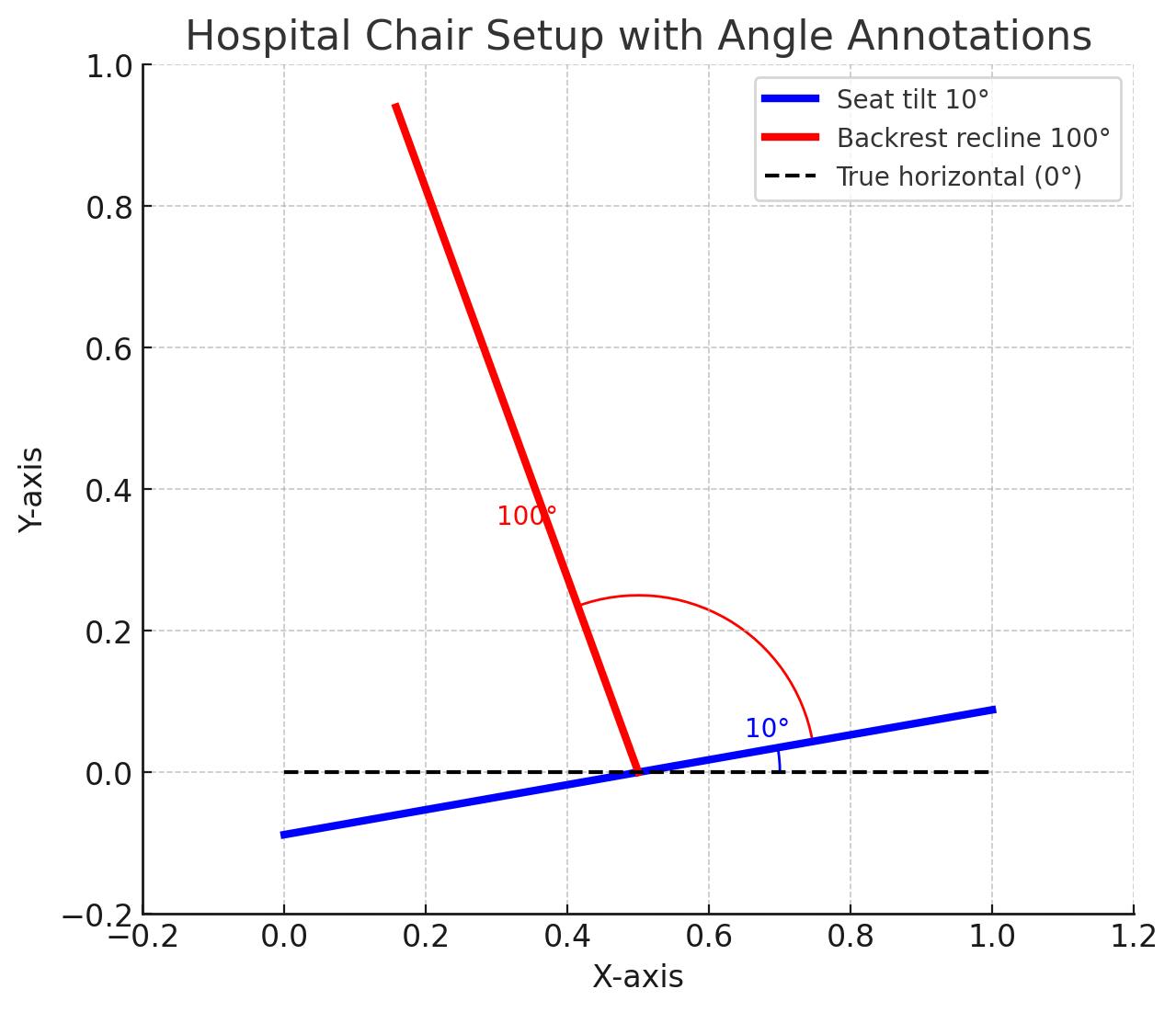
- Transfers: A mild tilt (around 10°) plus a 100° backrest usually allows safe transfers while maintaining comfort.
- Pressure Relief: Chairs designed for long-term use often allow tilt-in-space adjustments to redistribute pressure.
Recommendation
Optimal Seat Tilt and Backrest Recline Angle for Safe Patient Transport in a Treatment Recliner Chair:
- Seat tilt: 10–12° backward.
- Backrest recline: 100–105°.
This combination offers comfort, prevents sliding, supports posture, and remains practical for transfers and mobility.