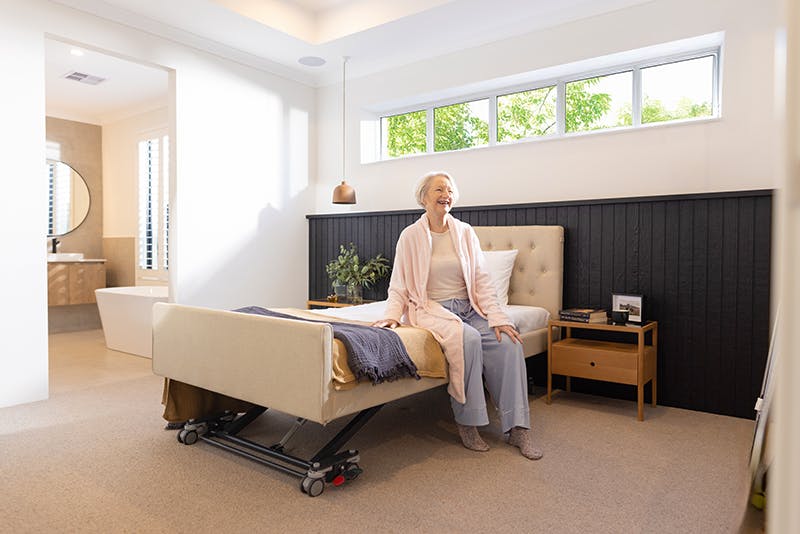
Essential Features to Look for in an Electric Profiling Bed
Comment on this post

Comment on this post
This is an essential list of must-have features for an electric profiling bed:
Underbed Clearance

Adequate underbed clearance is essential for compatibility with mobile floor hoists and other assistive technology/equipment, ensuring smooth transfers and accessibility for caregivers.
Knee Break

A knee break function provides crucial postural support by reducing pressure on the lower back and minimising sliding down the bed. This helps reduce shear forces when the backrest is elevated, optimising pressure care.
Auto-Levelling for Trendelenburg & Reverse Trendelenburg
Without auto-levelling, users may remain in a tilted position for prolonged periods, increasing the risk of complications. Auto-levelling ensures the bed returns to a parallel position, promoting safety and comfort.
Mattress Retainer

A shifting mattress can lead to falls and injuries if it moves outside the bed’s base. Mattress retainers keep the mattress securely in place, ensuring stability and safety.
Programmable Bed Exit Height
A programmable function that allows the bed’s exit height to be set to the optimal level, tailored to accommodate different user anthropometrics. This enhances safety and reduces fall risks during bed transfers.
Autoregression
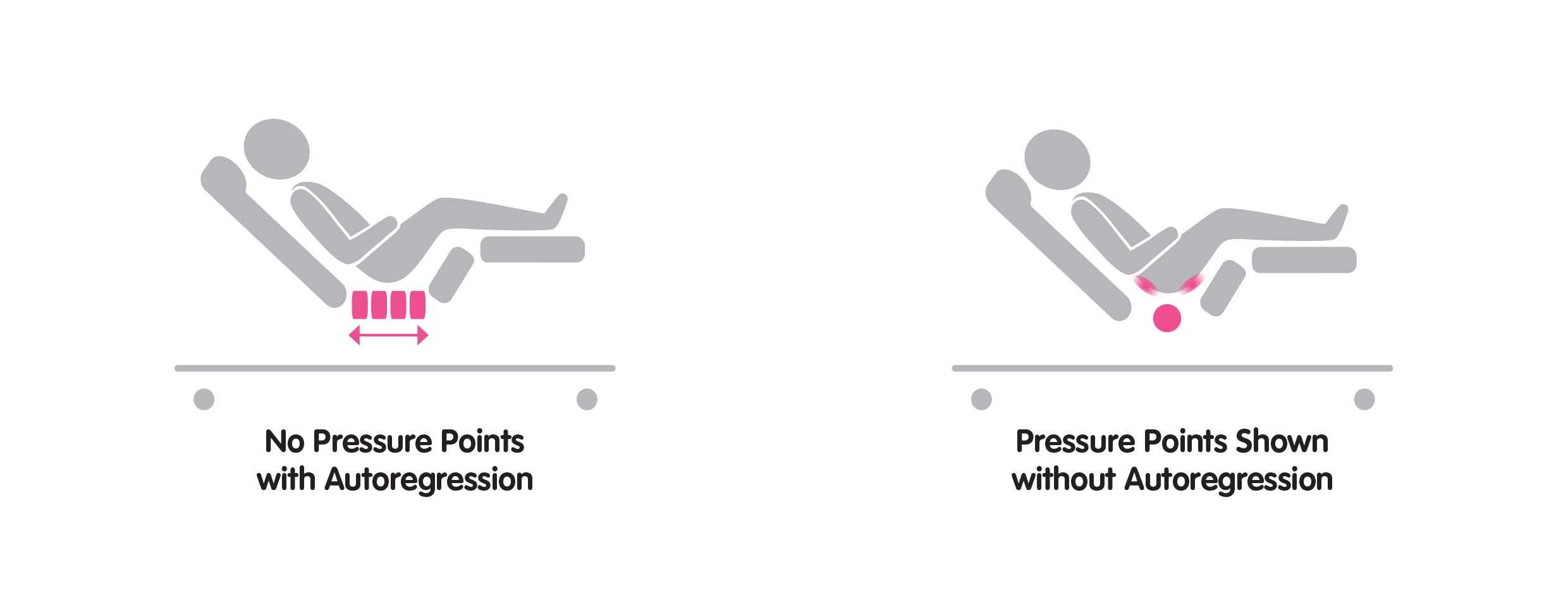
When the backrest elevates, autoregression reduces shear and compression, optimizing pressure care and minimising the risk of pressure injuries.
The right bed isn’t just about sleep - it’s about dignity, safety, and quality of life.
Learn about the essential features of an electric profiling bed in this video guide.
Electric Profiling Beds
An electric profiling bed is a specialised bed with a mattress platform divided into two to four sections that can be independently adjusted via electric motors using a remote control or handset. This provides tailored support for comfort, clinical positioning, and ease of mobility for people with disabilities, limited mobility, or medical needs in home, residential, and hospital settings.
Profiling beds are often referred to as electric beds or nursing beds, especially in aged-care and home-care settings. This terminology is frequently used by occupational therapists, hospitals, and aged-care providers when prescribing equipment for pressure management, mobility, and daily living support.
Auto-regression on hospital beds is a feature where the backrest moves backwards slightly as it is being raised or profiled, allowing the patient's body length to naturally elongate during sitting position adjustments. This reduces shear and friction forces between the patient and the mattress, which can otherwise cause discomfort or skin damage. Auto-regression also improves pressure distribution across the mattress and allows more room for patient movement and positioning, thereby helping to reduce the risk of pressure injuries over time.
Electric profiling beds improve comfort by providing customizable positions for sleeping, resting, and activities like eating or reading. They enhance mobility and independence, reduce pressure injury risk, facilitate safer transfers, and reduce manual handling effort for caregivers.
Key safety features include compatibility with mobiliy rails and side guards to prevent falls, emergency stop functions, anti-entrapment mechanisms, and adjustable low height for safer access. Beds should comply with relevant safety standards and provide secure, easy-to-use controls.
Profiling beds may require specific mattresses designed to fit the adjustable base and deliver pressure redistribution. It is best to ask your supplier to ensure compatibility and avoid entrapment risks.
Yes, many electric profiling beds, such as our Xcel3pro beds have contemporary designs to blend with home decor, combining comfort with clinical functionality. They are ideal for users with mobility issues needing support and for caregivers requiring ergonomic working heights.