


How does the Regency Carer Chair Provide Excellent Pressure Care?
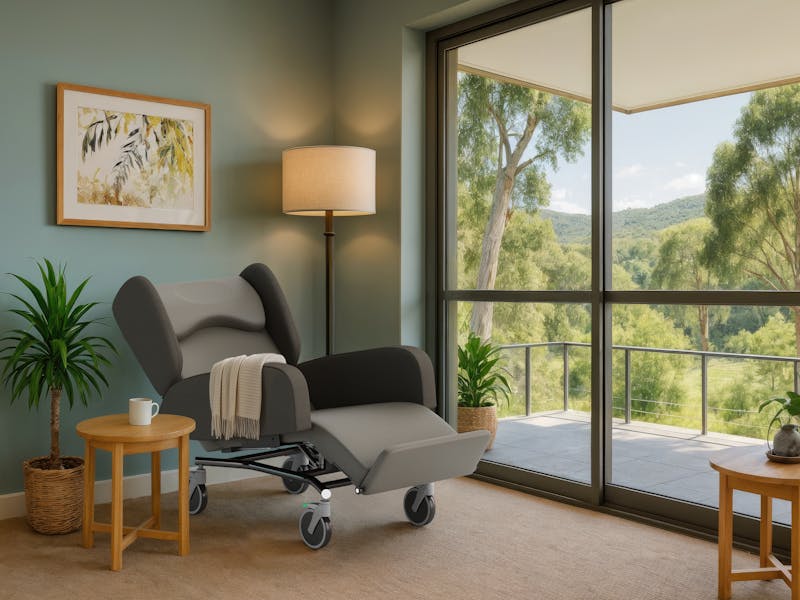
For individuals who spend extended periods seated, whether due to mobility limitations, chronic illness, or recovery, pressure injuries (traditionally known as pressure ulcers or bedsores) pose a real risk. A properly designed care chair plays a critical role in redistributing pressure, supporting posture, and ensuring comfort.
The Regency Carer Chair is engineered specifically with pressure care in mind.
Below, we explore how its features deliver superior protection, comfort, and safety.
The Challenge of Pressure Injuries
Before diving into the chair’s features, it helps to understand the basics:
- Pressure injuries develop when soft tissues, especially over bony prominences like the sacrum, ischial tuberosities, or heels, are compressed against a surface for prolonged durations.
- Shear forces (sliding or distortion of skin layers) and microclimate (heat and moisture) further exacerbate the risk.
- Effective pressure care requires:
1. Redistribution of interface pressures across a larger surface area
2. Minimised shear and friction
3. Adequate support for posture to avoid sliding and stress
4. Materials and upholstery that manage moisture and hygiene
A high-performance care chair doesn’t merely recline, it addresses all these factors through integrated engineering.
Key Pressure Care Features of the Regency Carer Chair
Here’s how the Regency Carer Chair stands out in delivering excellent pressure care:
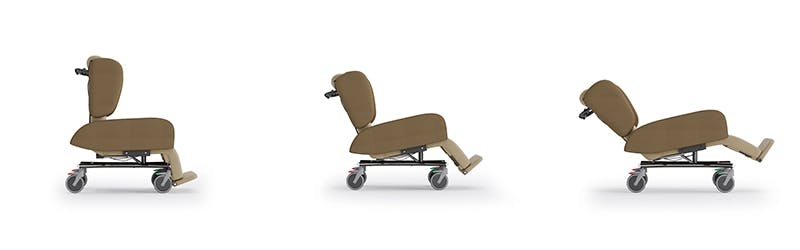
1. Tilt-in-Space Seating System
The chair uses a tilt-in-space mechanism to maintain the angle between the seat and backrest while tilting the whole system. This helps:
- Redistribute pressure away from vulnerable zones when tilting posteriorly
- Minimize shear forces since the user doesn’t slide forward or backward relative to the chair
- Support posture and facilitate safer transfers
- Provide anterior tilt (5° forward) to assist with standing and engaging with activities
By controlling the tilt dynamically, the chair can more effectively relieve pressure without compromising stability.
2. Multilayer Pressure-Relieving Support Surface (Gel + Foam + Air)
The Regency Carer Chair features an advanced Multicush™ pressure management system:
- A high-density foam base for stability
- A fluidized gel layer seat to conform to body contours and reduce peak pressures
- Self-adjusting air cells in the backrest (including a lumbar cell) for distributed support
These technologies allow immersion (letting the body sink into the cushion) and envelopment (contouring around the body), which both help lower interface pressure points.
Clinical pressure-mapping studies provides evidence-based insights into the chair’s ability to redistribute weight away from high-pressure areas, effectively minimizing peak pressures over vulnerable areas and demonstrating its effectiveness in delivering optimal pressure relief for seated users.

3. Four-Way Stretch, Medical-Grade Upholstery
Even the best internal cushioning is less effective if the cover is rigid. The Regency Carer uses a medical-grade, 4-way stretch fabric over the seating system, promoting:
- Better immersion and envelopment of bony protrusions
- Reduced shear at the skin–fabric interface
- Easier cleaning, which helps maintain hygiene and reduce skin irritation
This stretch fabric works in tandem with the internal cushioning layers to enhance pressure redistribution.
4. Adjustable & Removable Head Cushion
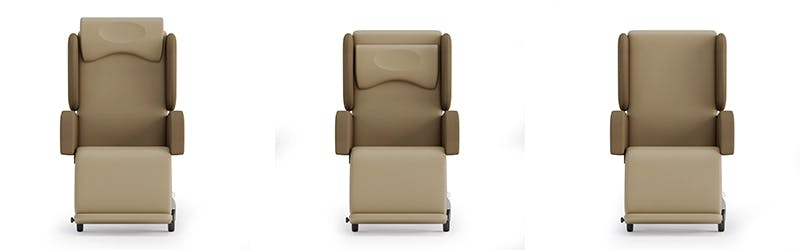
Proper head and neck alignment reduce strain and help prevent sliding, which can cause micro-shearing. The head cushion in the Regency Carer Chair is adjustable to provide maximum contact with the support surface.
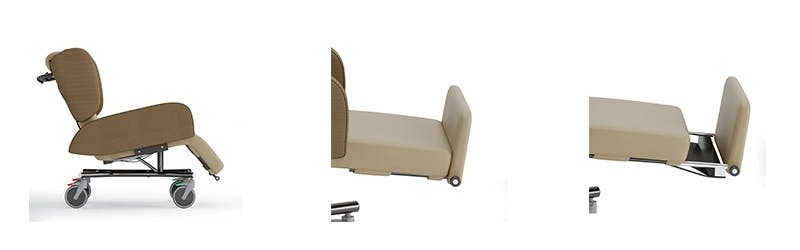
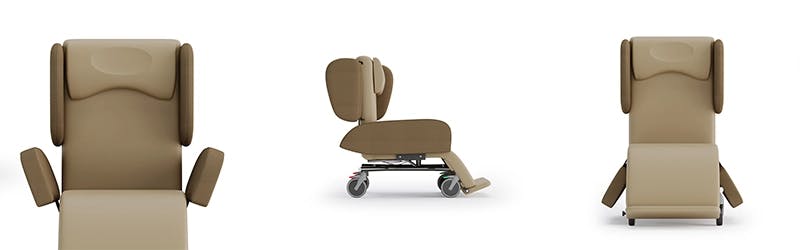
5. Footplate Design (Fold-Away + Extendable)
The footplate is designed to:
- Fold away when a user cannot maintain full contact (reducing unwanted pressure on heels)
- Extend to suit longer legs or different postural needs
- Provide proprioceptive input (i.e. feedback) through foot contact, which can assist in shifting posture or pressure relief
Because the footplate is weight-bearing and integrated into the frame, it also helps with more stable pressure redistribution.
6. Optimised for Transfers & Hygiene
Some additional design choices that indirectly support pressure management:
- Fold-down and swing-away armrests facilitate easier transfers and reduce the need for awkward manoeuvres
- Fold-away footplate helps with forward transfers
- Ambla® medical vinyl upholstery is waterproof, non-porous, easy to disinfect, and supports infection control in clinical settings
- The base structure supports mobile hoists, so repositioning can be done safely and without undue skin stress
7. Structural Strength, Warranty & Load Capacity
The chair boasts a safe working load of 200 kg, a 10-year warranty on the frame, and 3 years on components. These factors ensure long-term reliability and structural integrity, critical when pressure care over years is involved.


