


Improving community healthcare outcomes through assistive technology: An industry and Unicare partnership
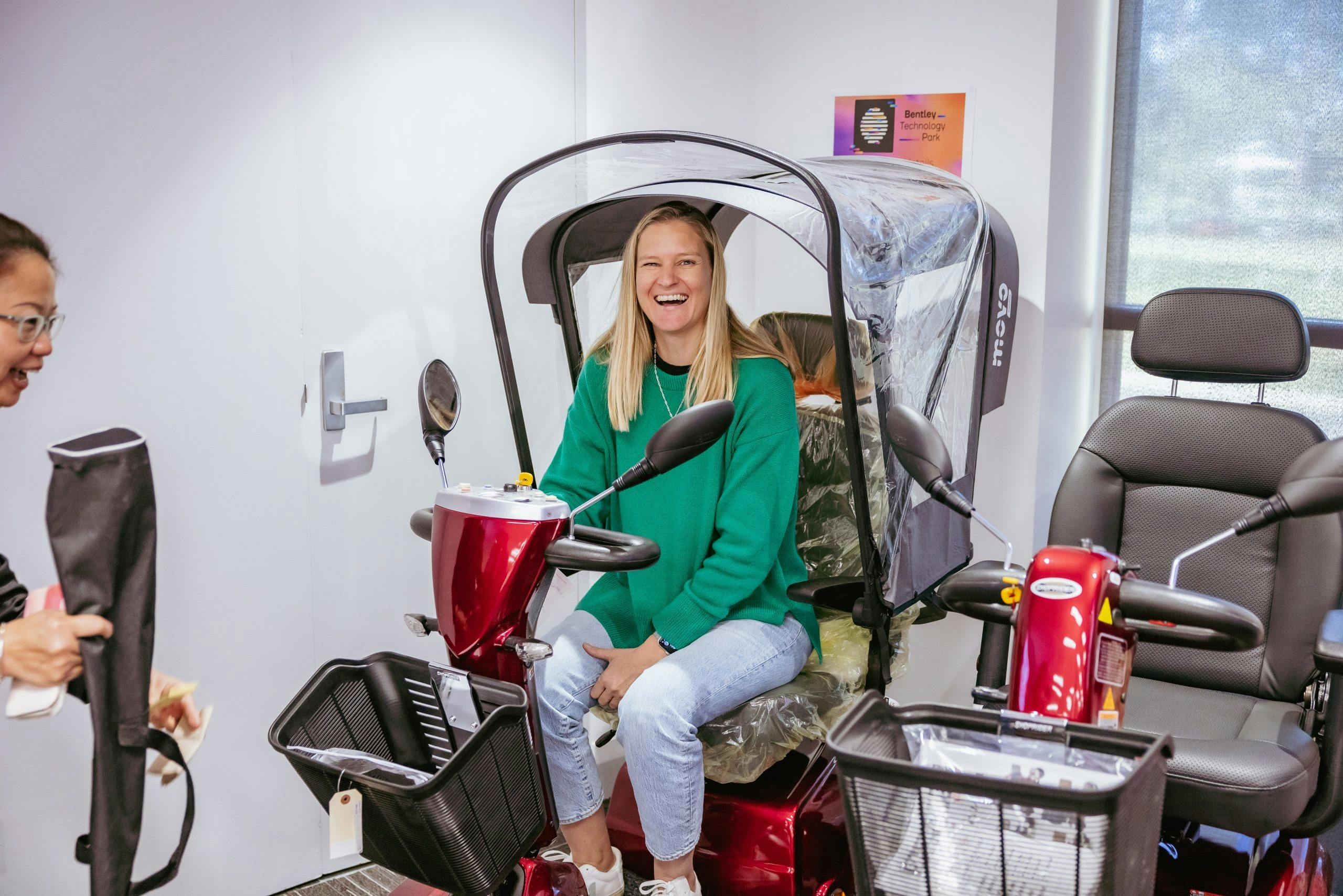
Seminar: Assistive Technology for Community
-Reviewing clinical advantages of equipment choice to achieve Independent Living, Rehabilitation and Reablement goals
Technology Park Function Centre, Bentley
Thursday, 18 May 2023
Assistive technology ranges from the most feature-packed nursing bed to the simplest kitchen aid. Both can be life-changing, but what might be perfect for one may be completely unsuitable for another.
This seminar did more than just discuss commonly prescribed assistive technology for community. It explored the therapeutic advantages of equipment and how they relate to use and application. It taught therapists what questions to ask to make informed and personalised recommendations. It also considered real customer challenges and issues that are often overlooked when prescribing assistive technology for community access.
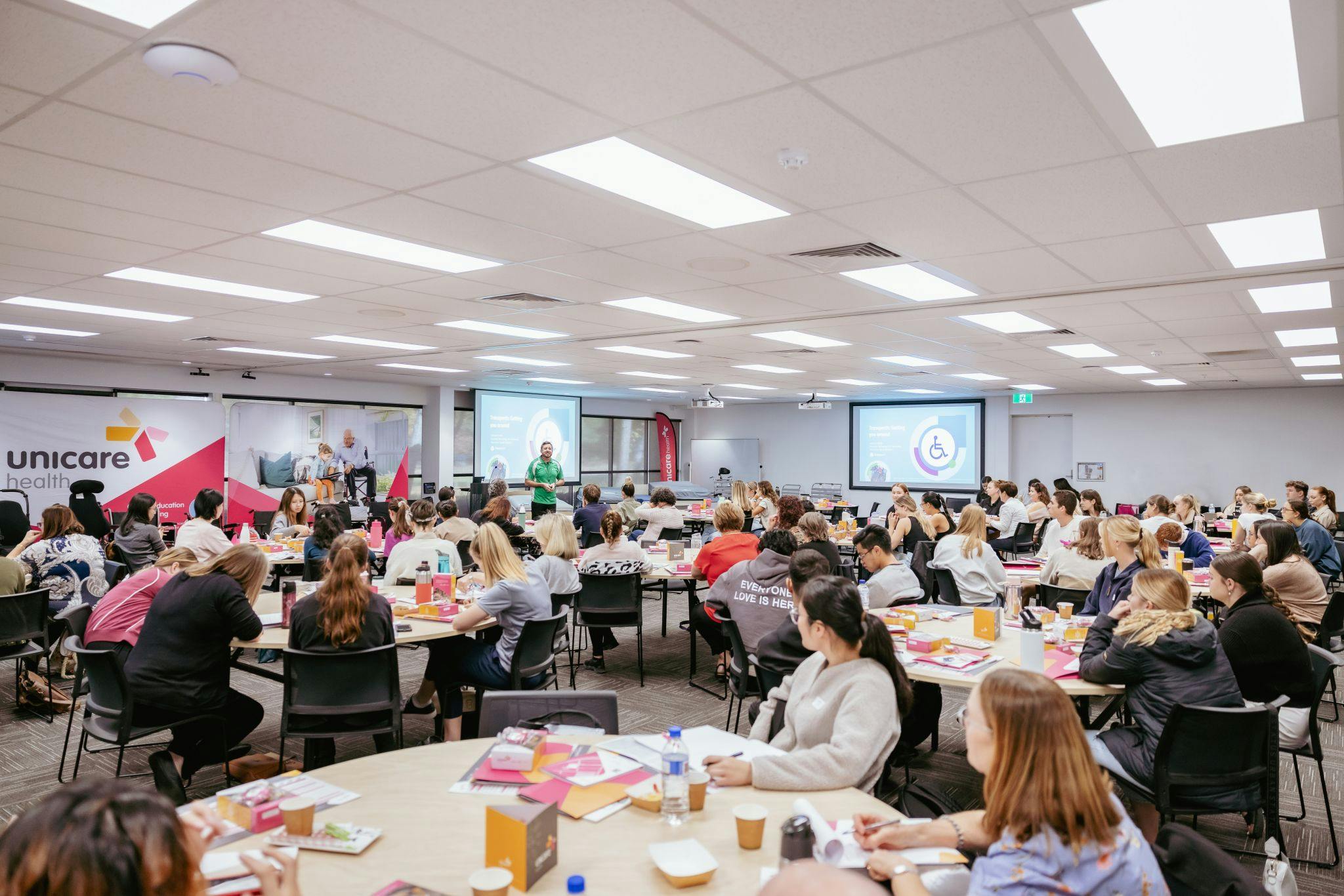
We were delighted to welcome over a hundred occupational therapists, physiotherapists, and community care coordinators to this session.
Three members of the Unicare Health team facilitated this seminar.
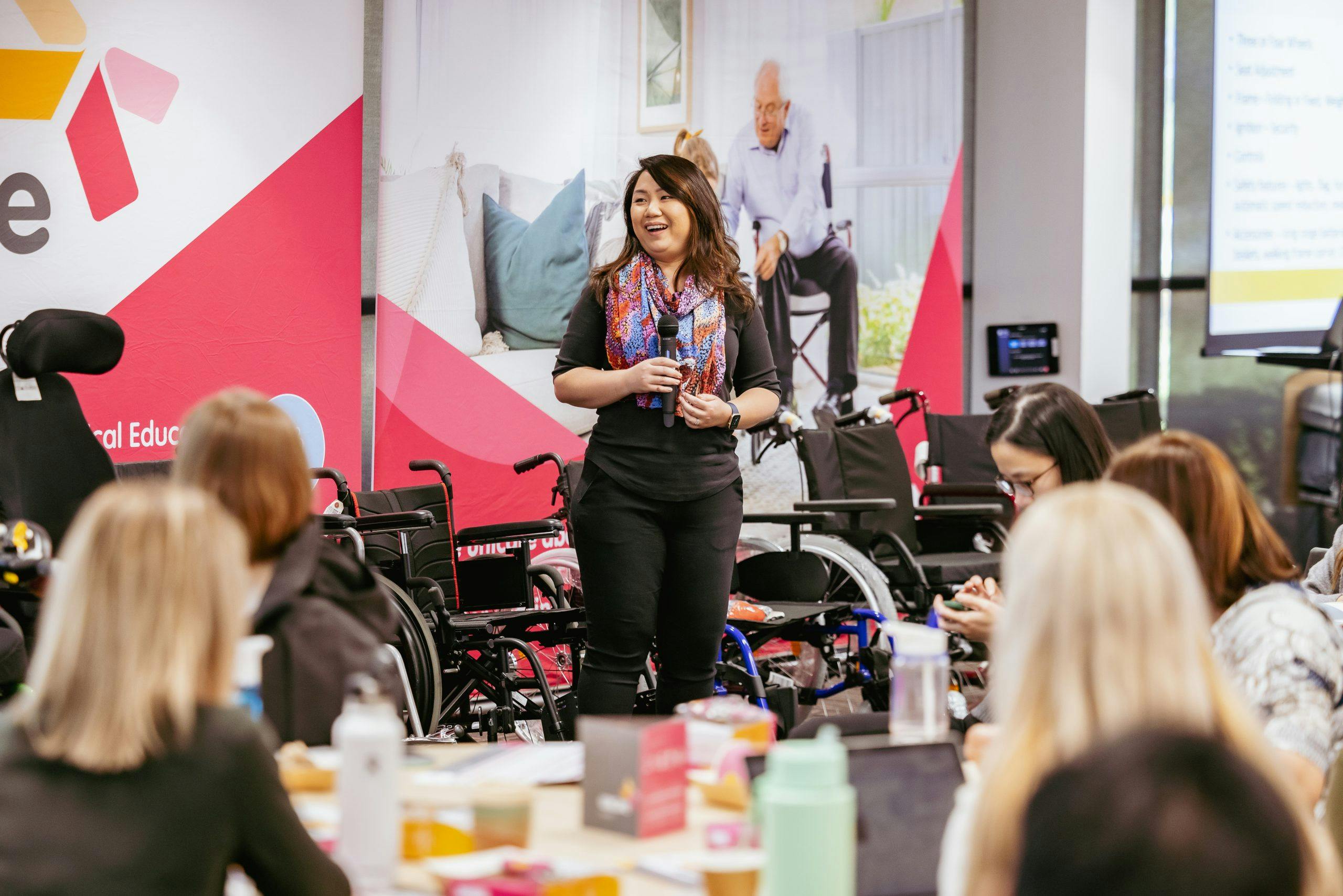
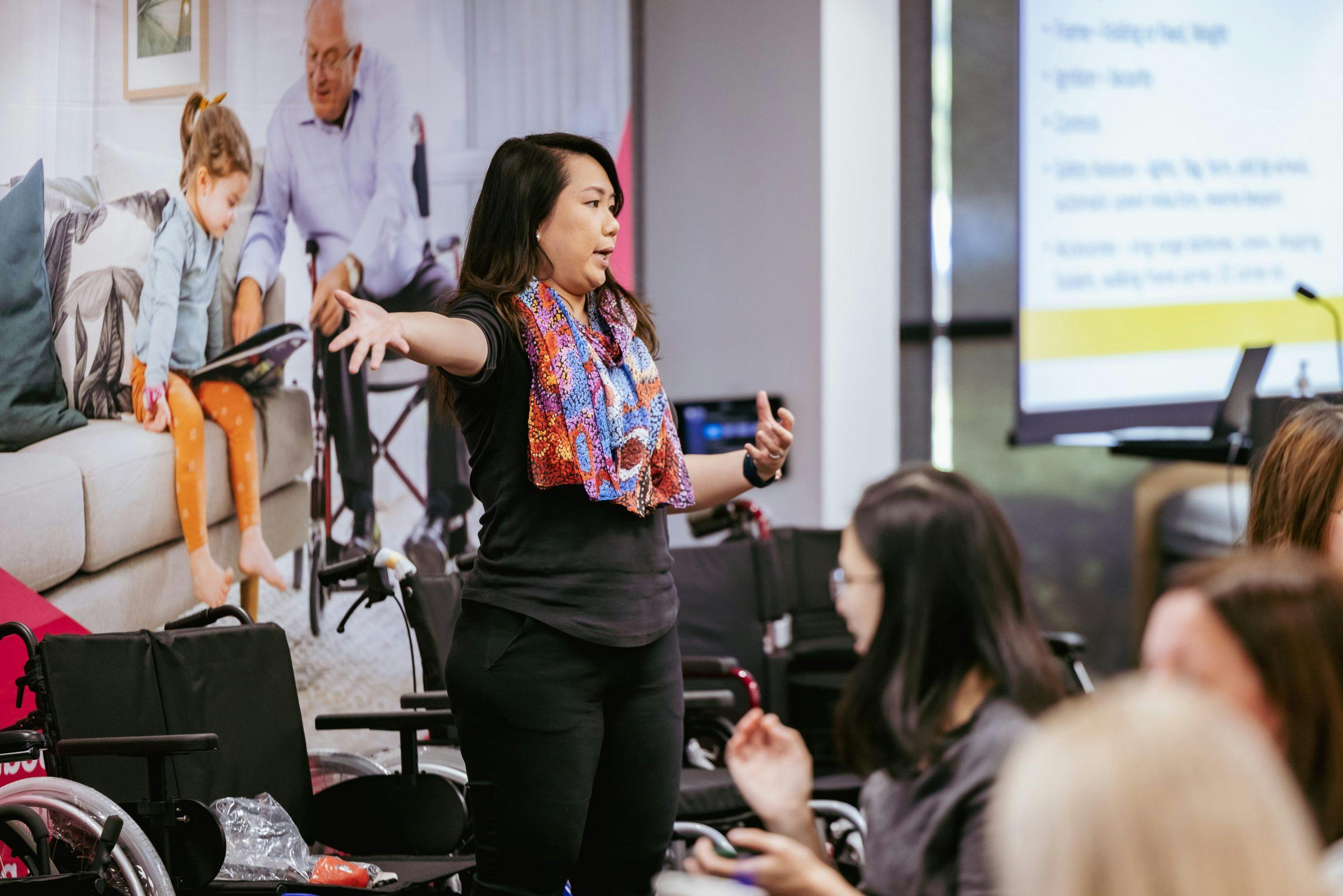
Unicare’s sleep support surface focussed educator and occupational therapist Ilissa Liew, was first to take the stage. With 15 years of clinical experience and a passion for pressure care and positioning solutions, Ilissa is a skilled educator and prescriber of healthcare beds, mattresses, and positioning devices.
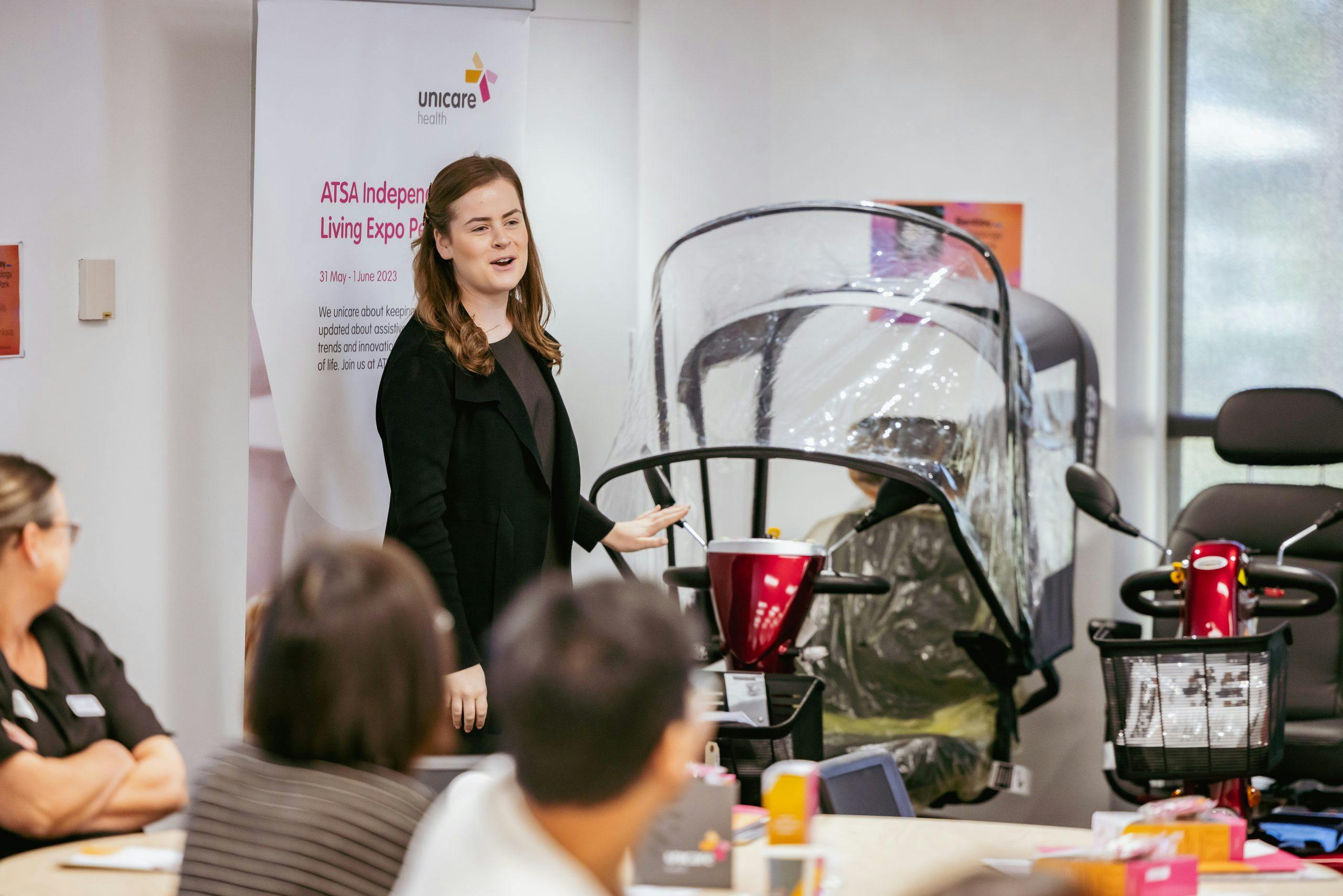
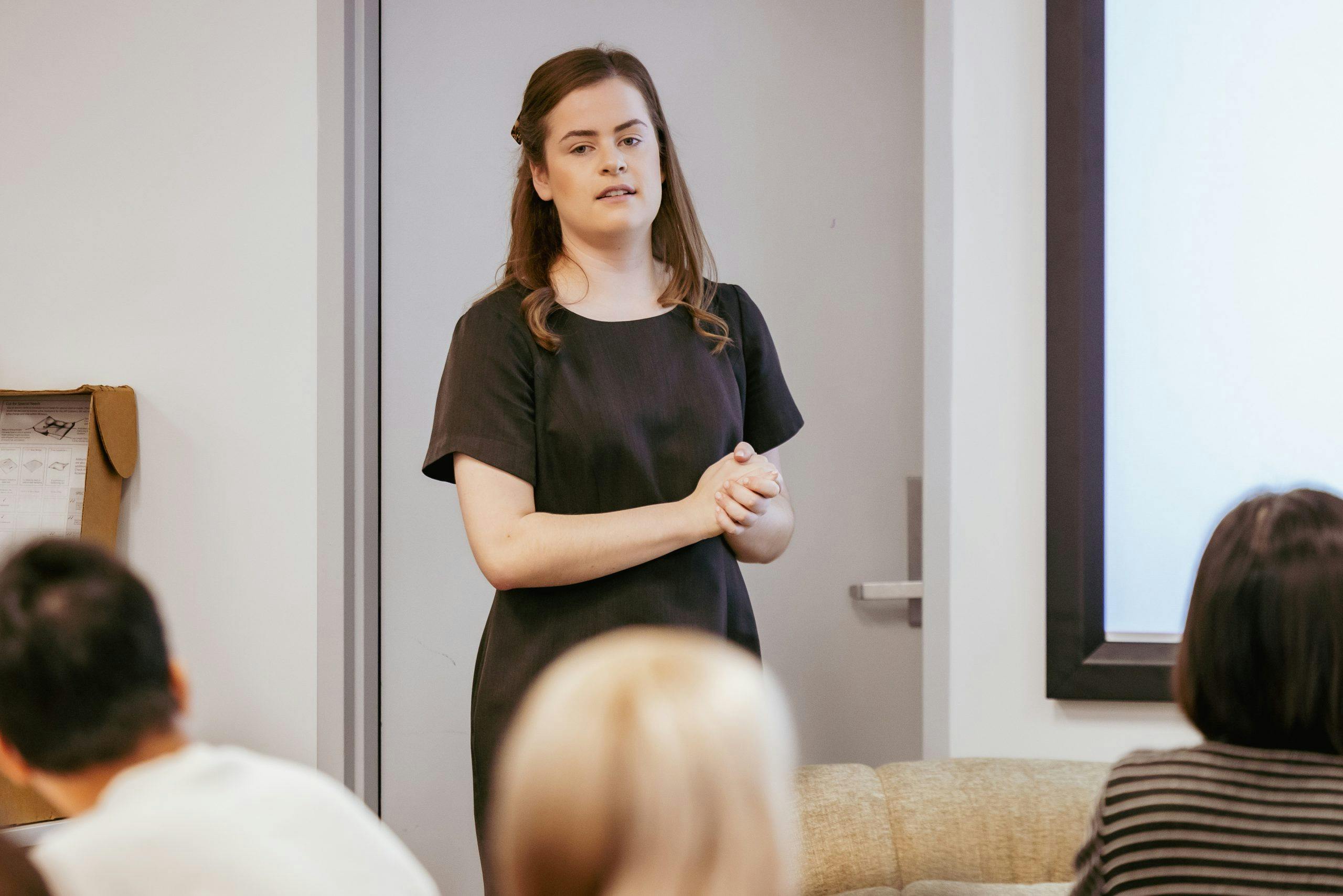
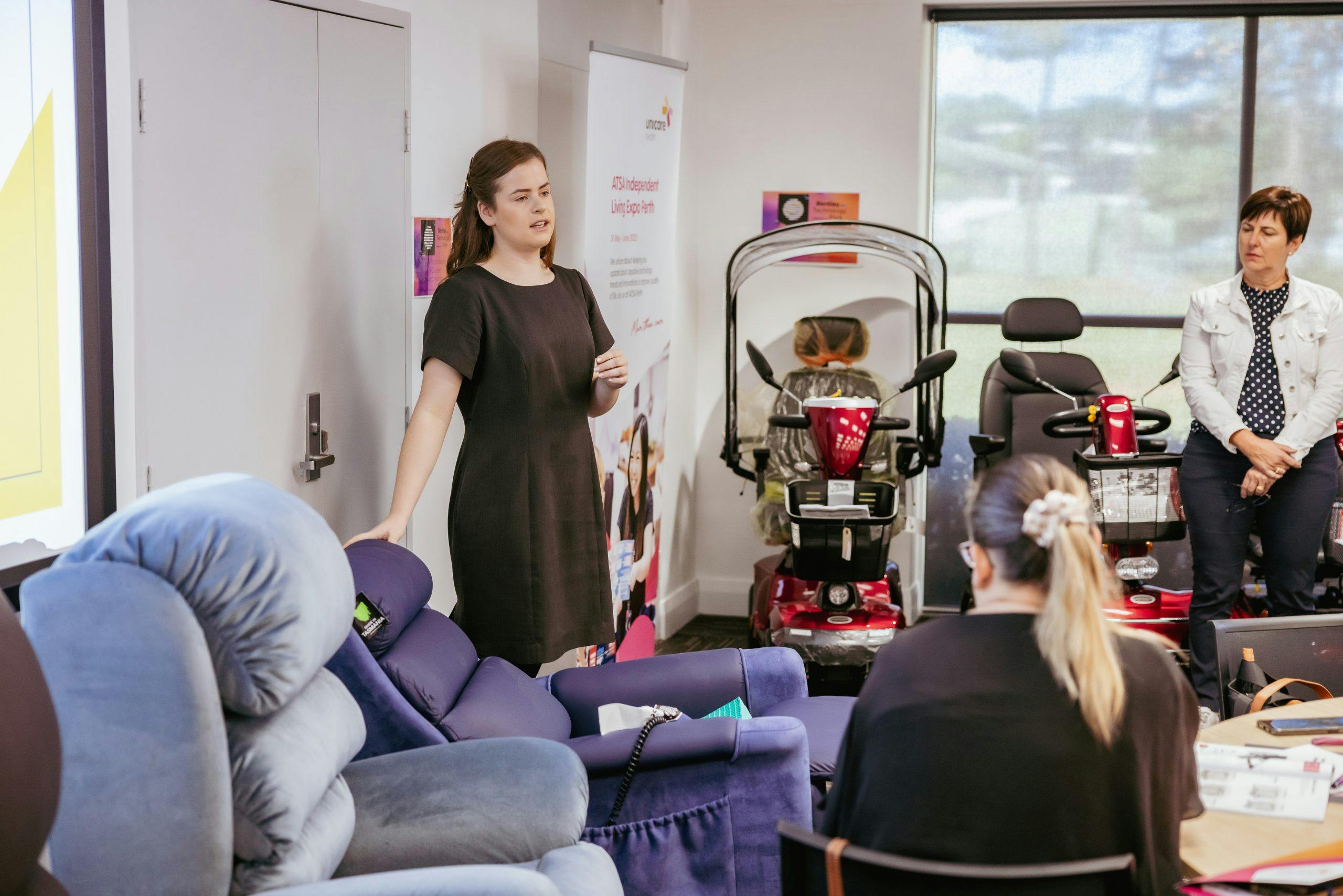
Also presenting at this session was one of Unicare’s most sought after product specialists, Victoria Dartnall. With extensive product knowledge and experience, Victoria dived deep into equipment features and benefits, compared and contrasted them and discussed why some clients would benefit from particular clinical features more than others.
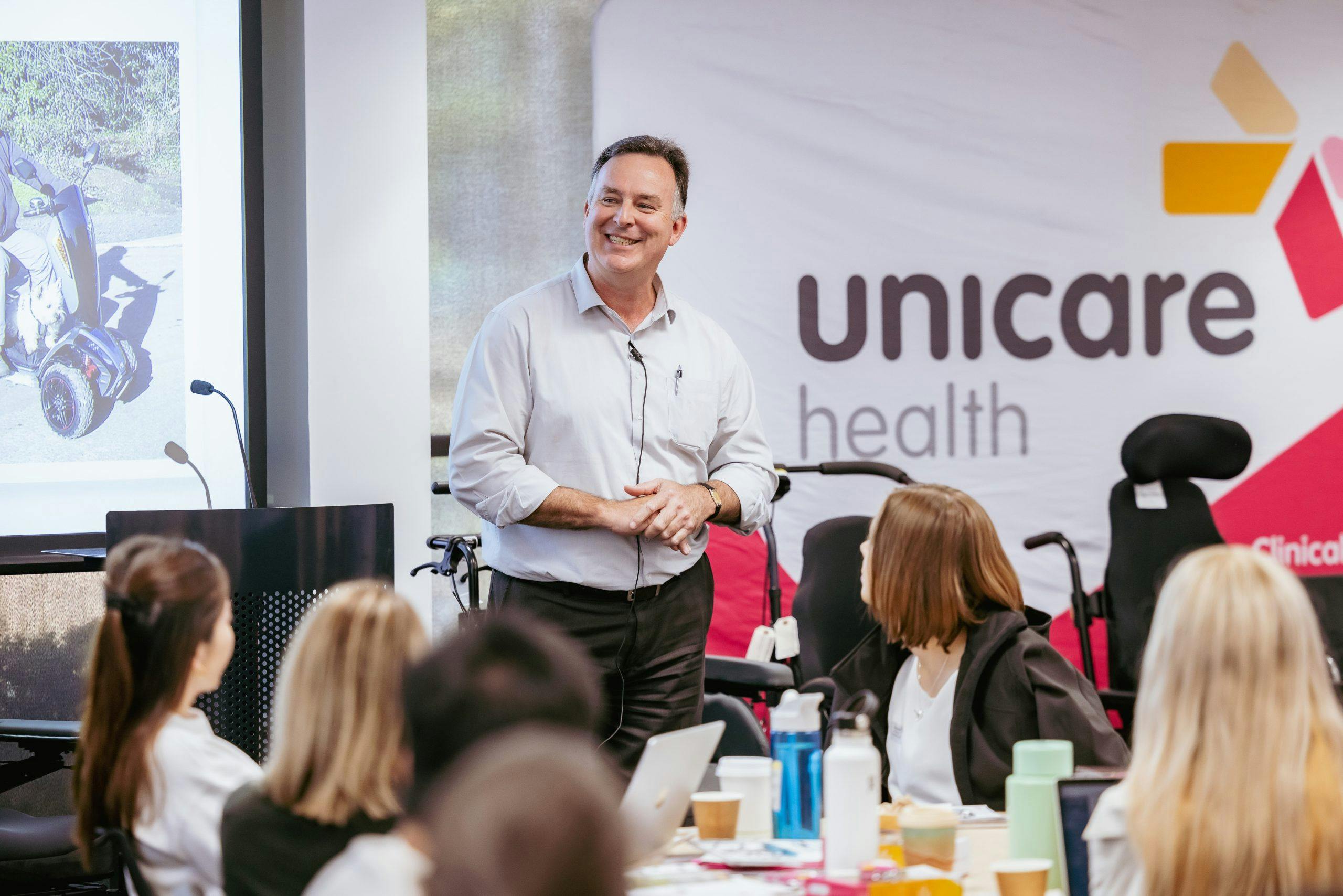
Our third speaker of the day was one of our most popular customer relations managers, Llew Pollard. Llew shared a wealth of invaluable knowledge he acquired through years of experience working with therapists and clients.
Ilissa opened the session by describing challenges a therapist may face when prescribing assistive technology equipment. She stressed the importance of acknowledging the client’s personal goals and clinical goals as equally important.
“Each client presents a unique scenario to evaluate before selecting appropriate equipment.”
Victoria rolled into our wheelchair range, starting with standard “out of the box” options. She began with the most basic models and introduced their features and suitability for community access.
She discussed popular options like the lightweight Echo Lite and the Ansa Tourer, the adjustable Breezy Basix and Rubix, and the bariatric Extra Care.
Victoria also discussed Unicare’s lift & recline chair range, including the Twilight, the Ashley, Ashley Platinum, the Relaxer, and the Comforter.
She explained the Ashley chair’s customisable features, such as seat depth, seat width, and backrest height. She also talked about the most suitable pressure relief cushions for the Ashley Platinum chair.
Llew discussed complex semi-scripted and scripted wheelchairs, including the SR45. He talked about the clinical and personal factors that influence whether a scripted wheelchair should be considered.
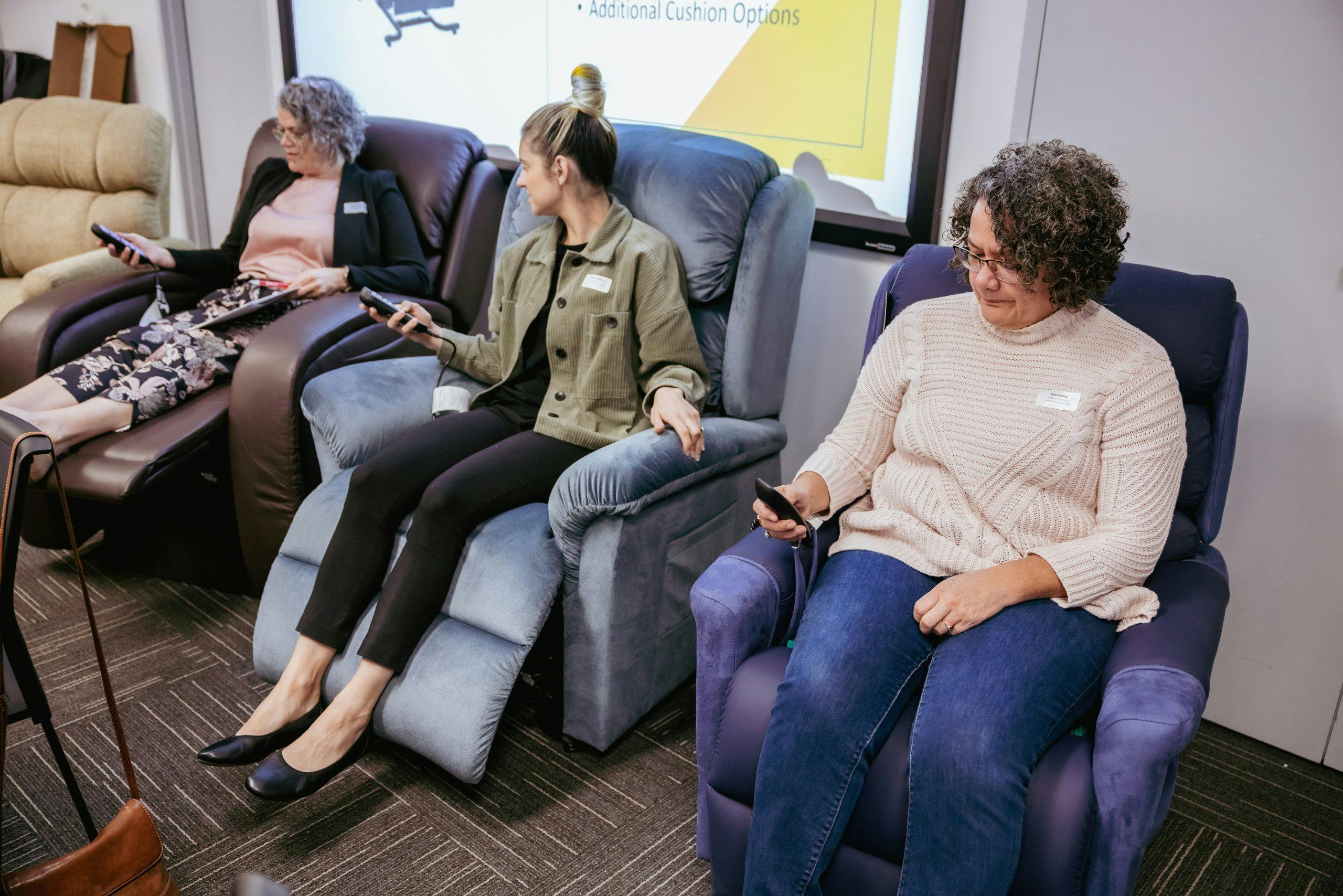
During morning tea, therapists were invited to try these seating options for themselves.
After morning tea, attendees were treated to a Special Feature by Transperth’s education officer, David McMahon.
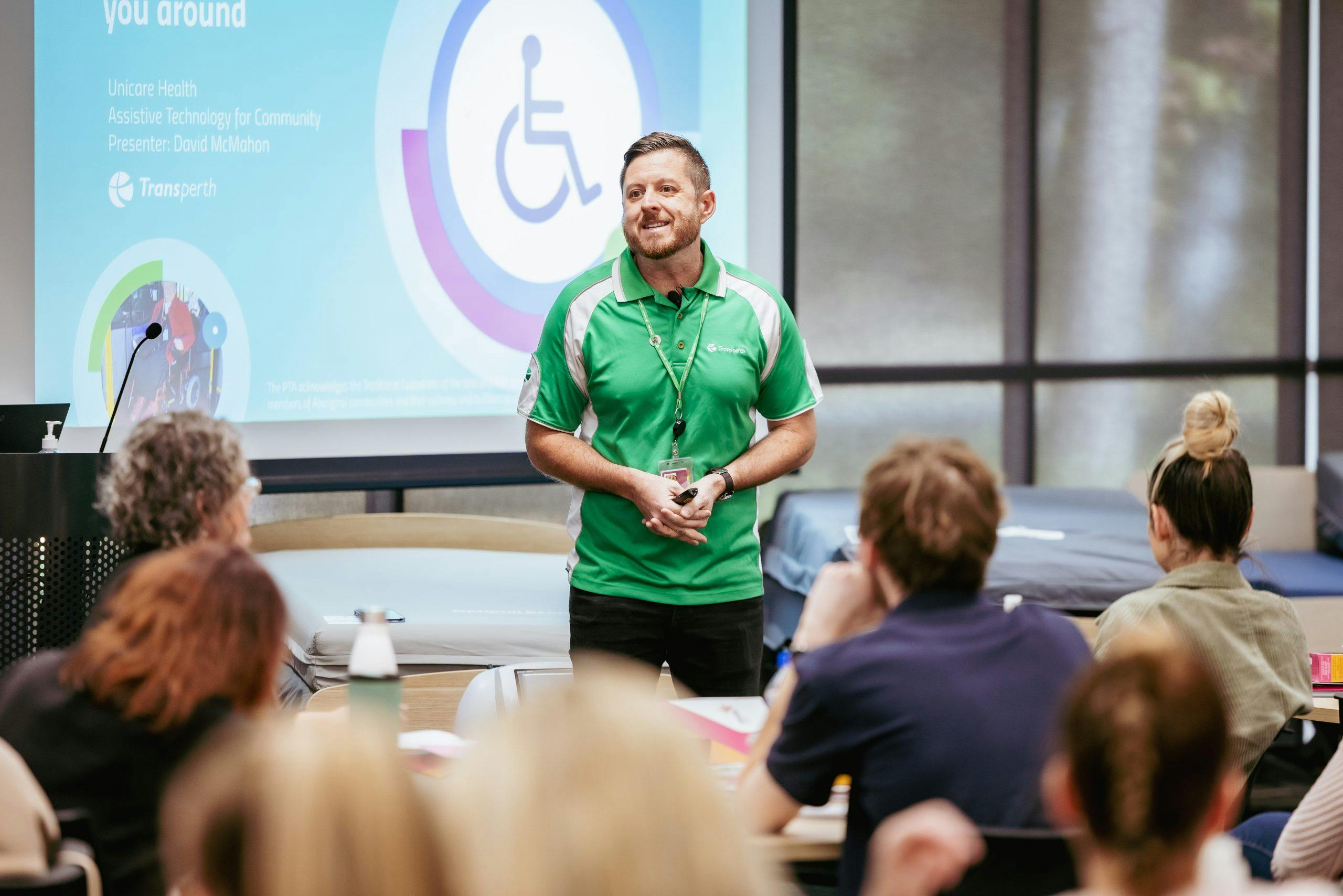
David addressed the steps Transperth have taken to make public transport an accessible option.
He spoke on the progress being made by Transperth’s Disability Access and Inclusion Plan, with inclusive modifications to stations, buses and bus stops ongoing.
- What is the Safe Working Load (SWL) of a bus ramp?
- What is the maximum size of a mobility scooter permitted on a train?
- What’s the difference between independent access and assisted access train stations?
David encouraged everyone to trial Transperth’s system to determine the degree of accessibility that exists at different stations.

David raised some significant points to consider when prescribing mobility devices for buses, trains & ferries and highlighted the risks that people with disabilities commonly face when using public transport.
He concluded his presentation by offering further resources to attendees wanting to learn more.
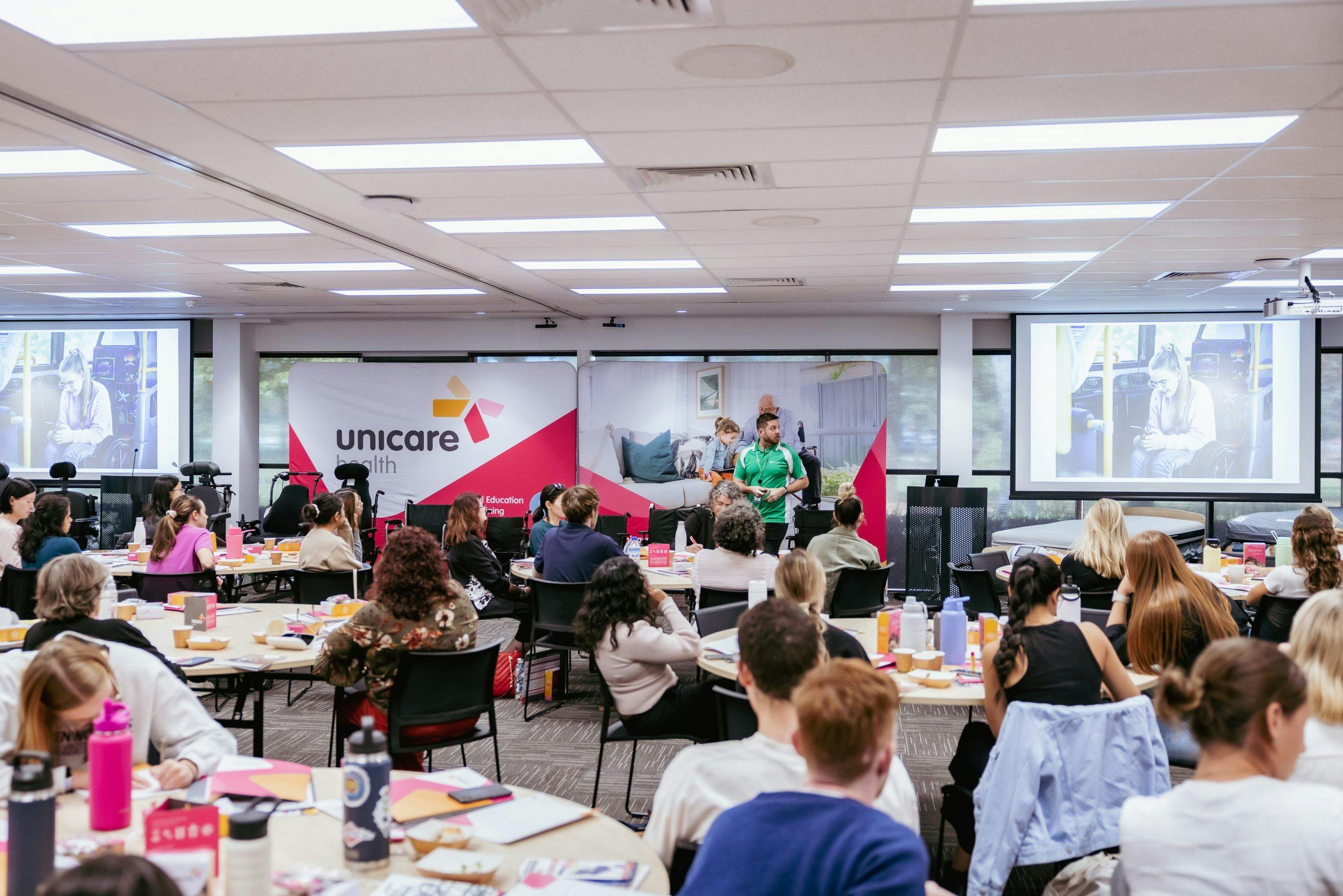
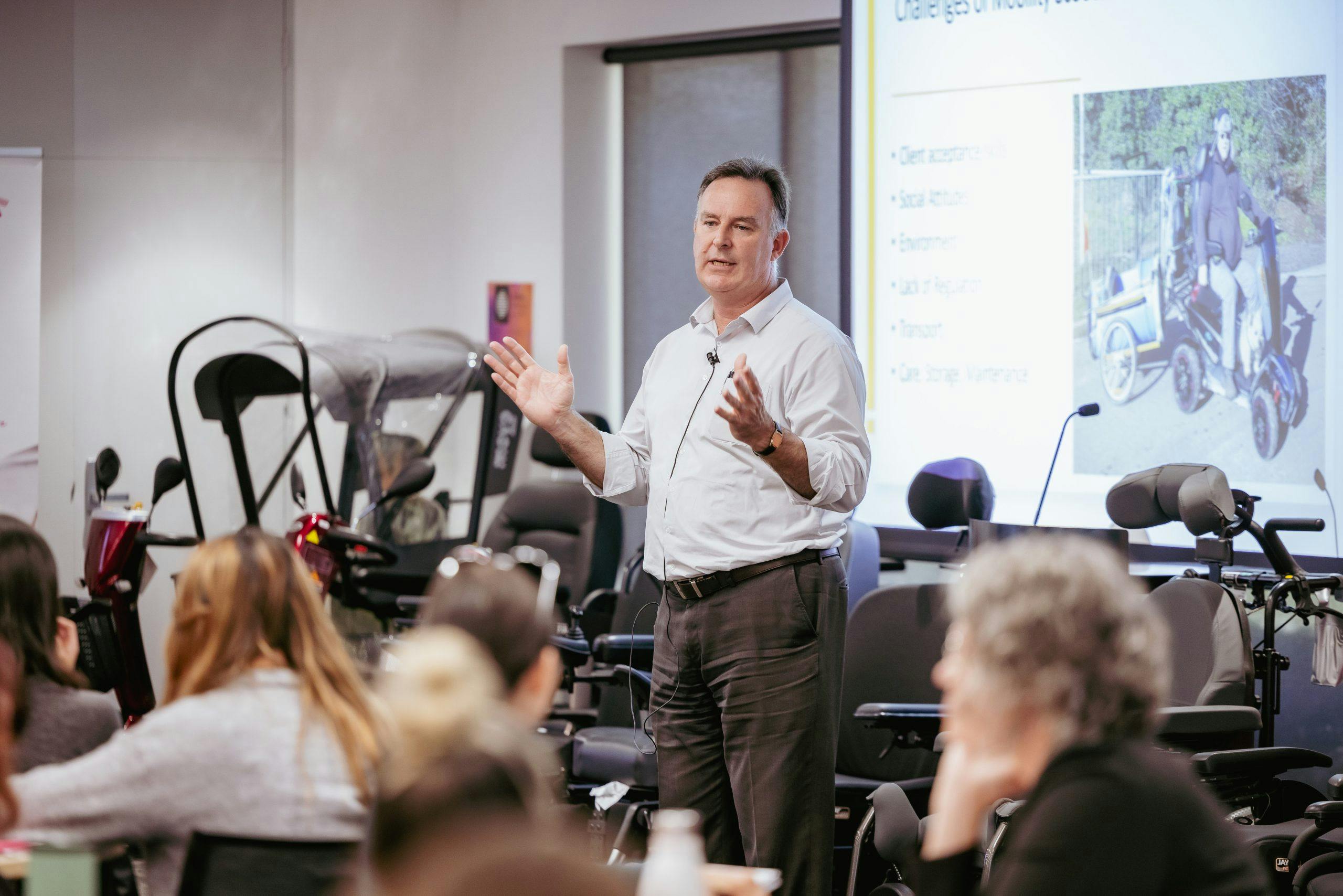
Llew then took the stage to discuss power scooters.
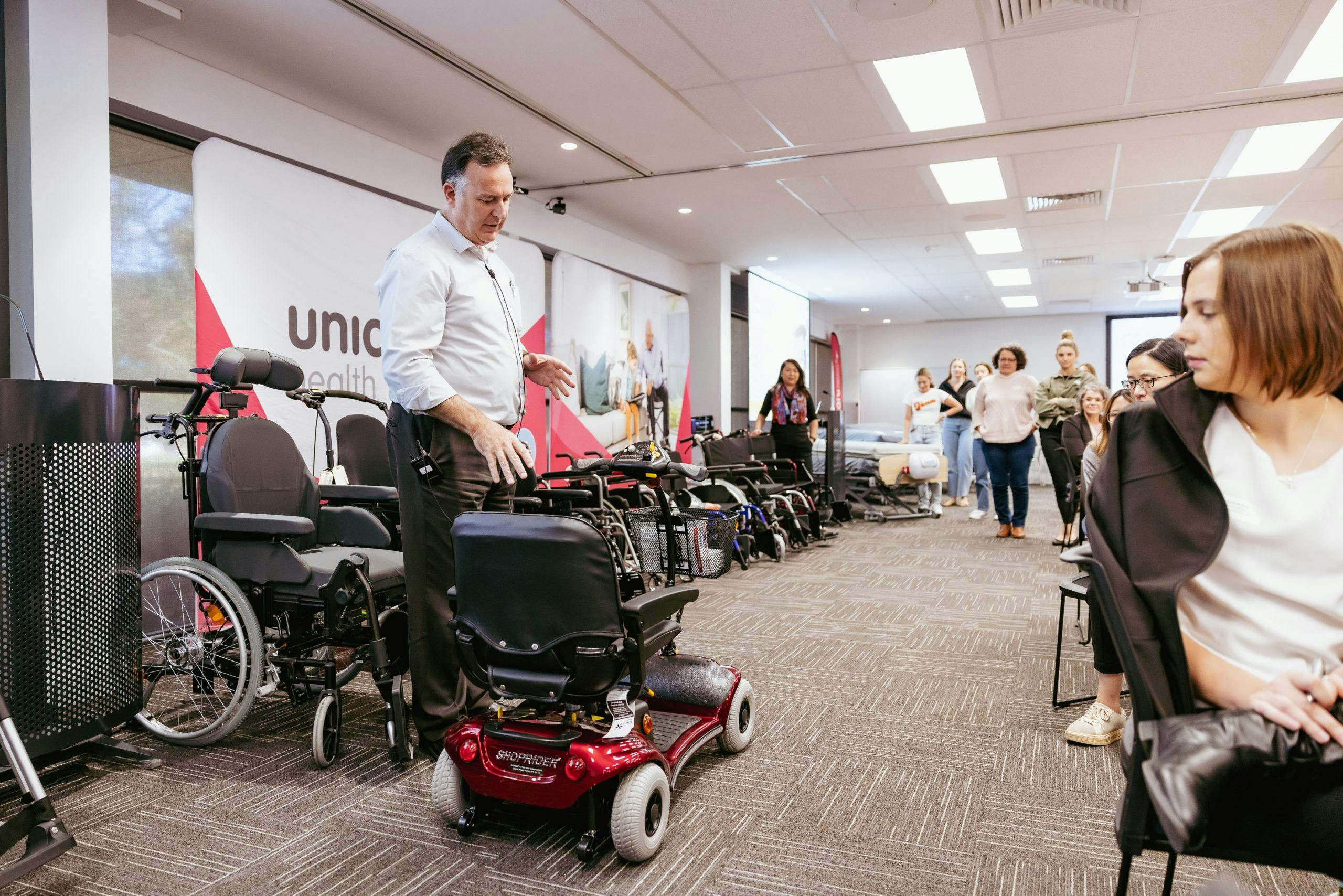
Llew addressed the challenges associated with prescribing scooters.
“A client’s environment and attitude to scooters will influence if it is an acceptable choice for them.”
He endorsed this by sharing his own experiences when demonstrating scooters in the community.
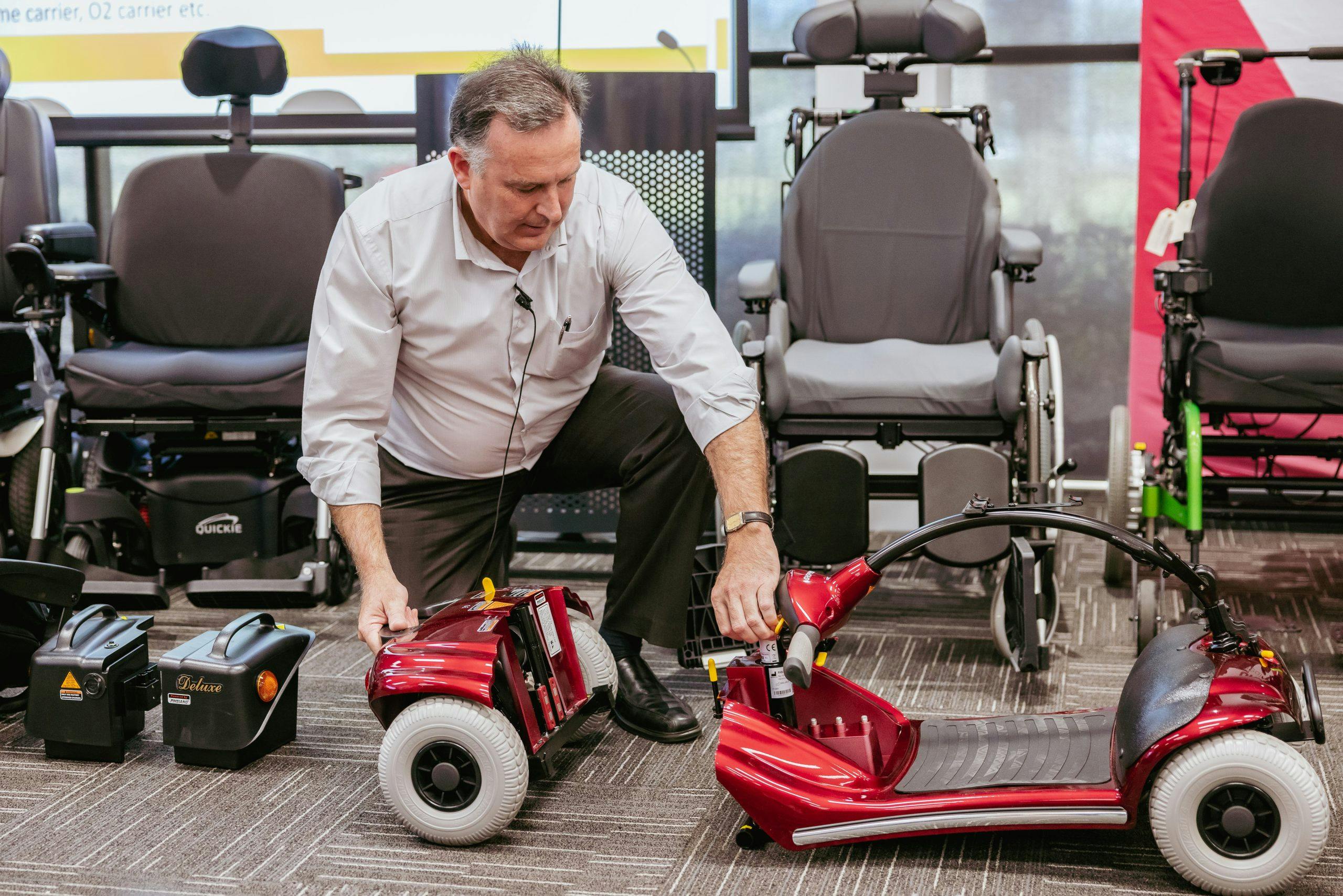
He then explored the features of the scooters on display, including the portability of the Little Ripper scooter by Shoprider. He reminded therapists to consider the complexity and weight of components and to think about 80-year-old John attempting to put a scooter together or pull it apart at a shopping centre car park.
Our attendees were served a delicious lunch and given time to have a go with all the equipment being presented.
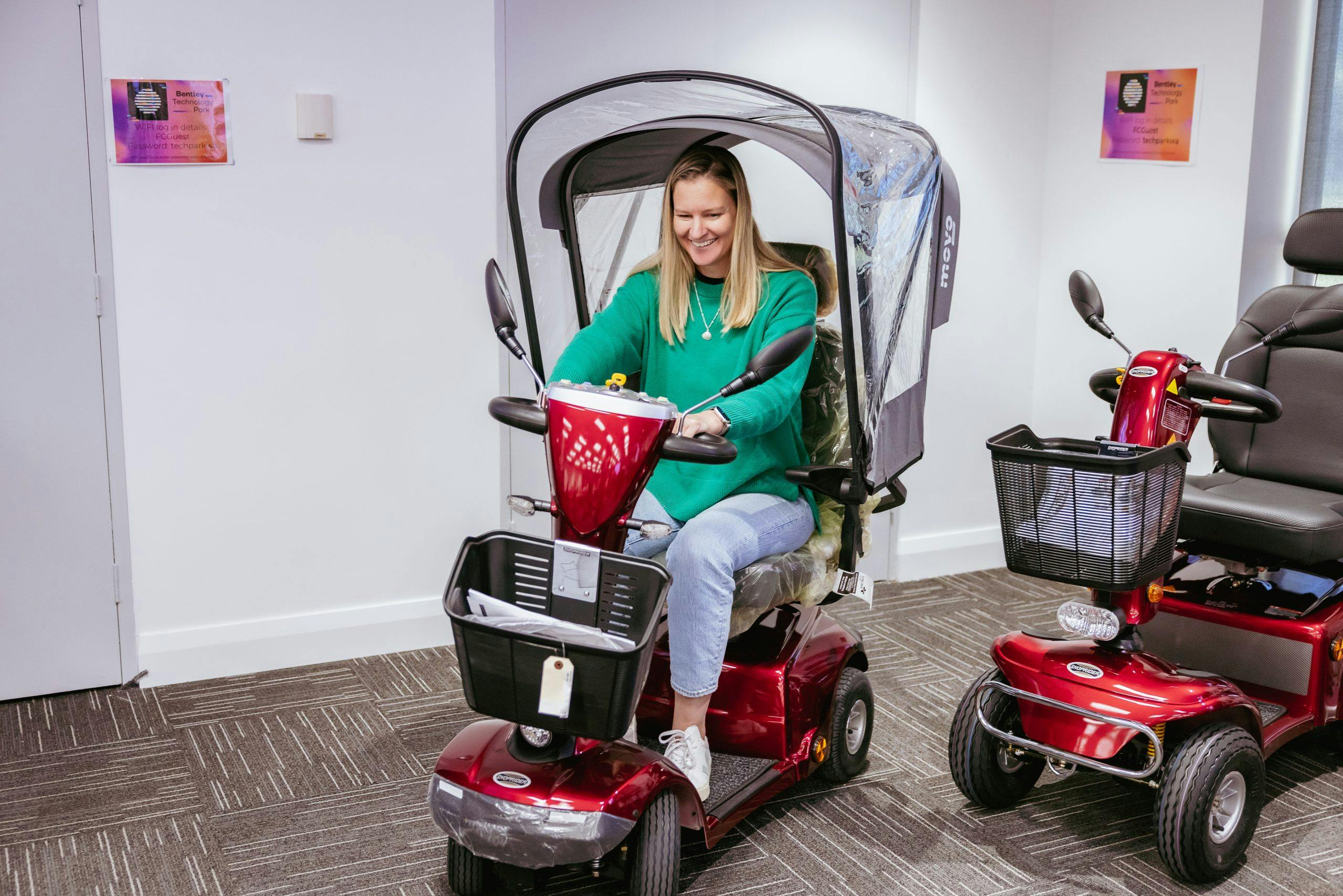
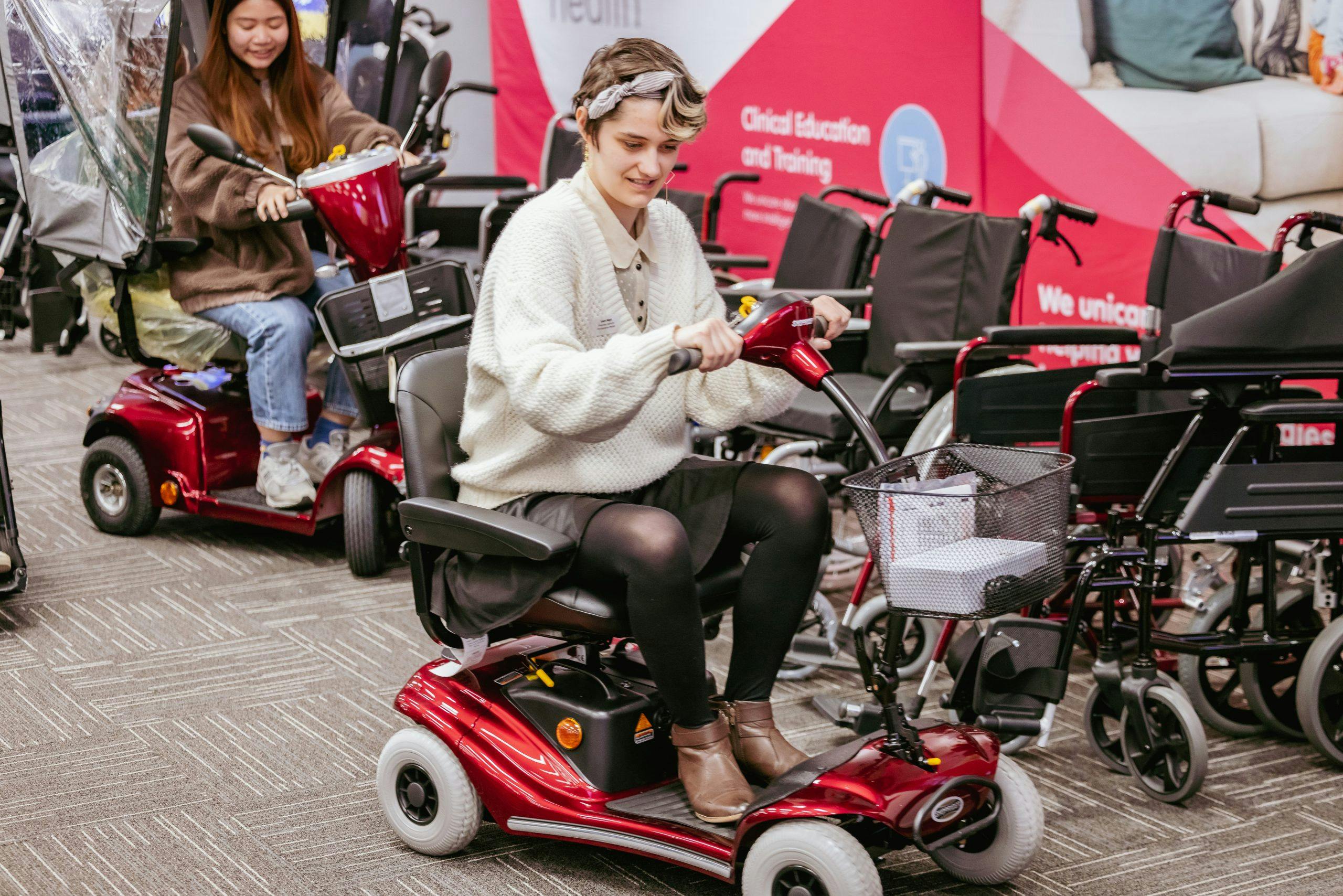
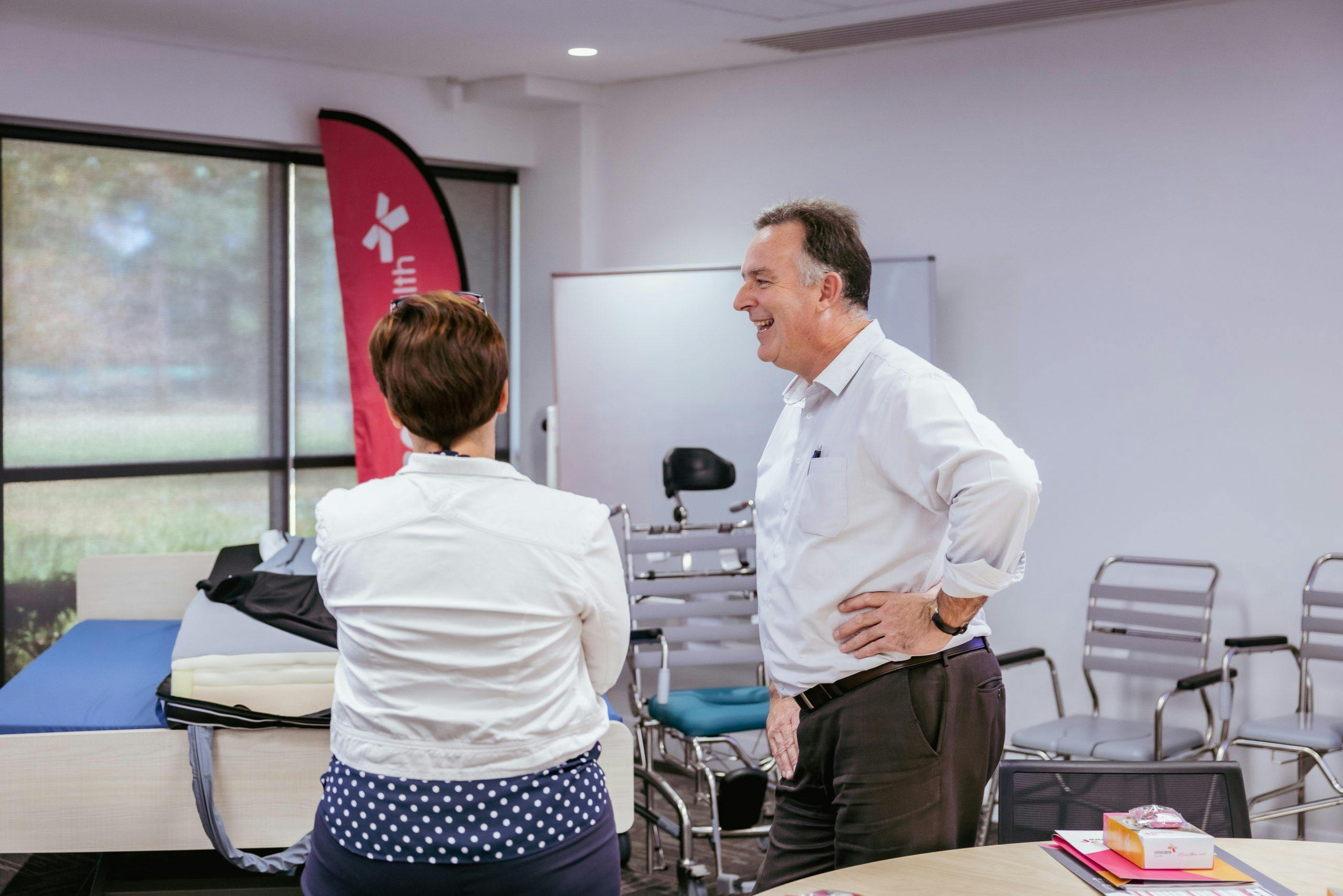
It was a great opportunity for therapists to have a one-on-one chat with our equipment pros.
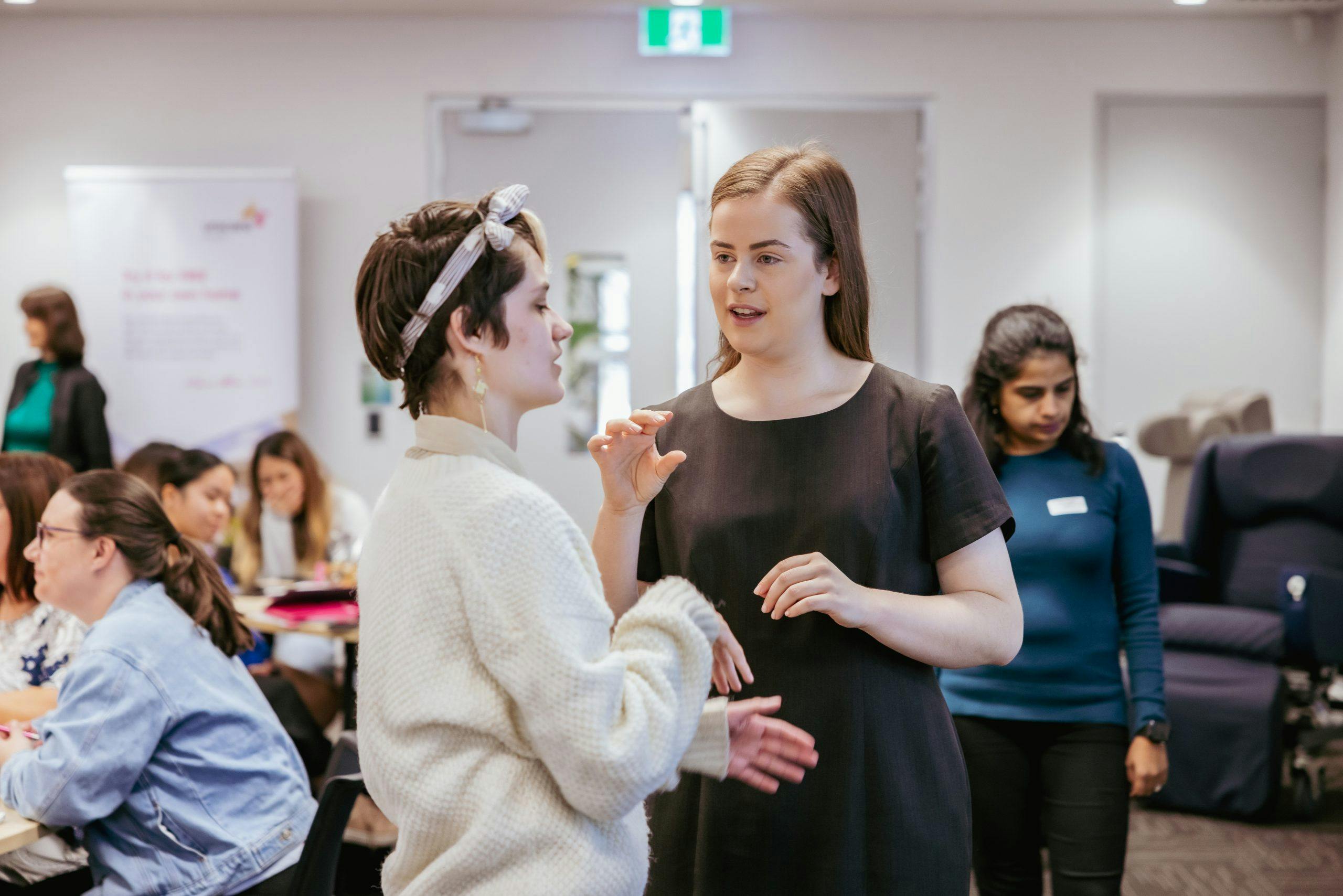
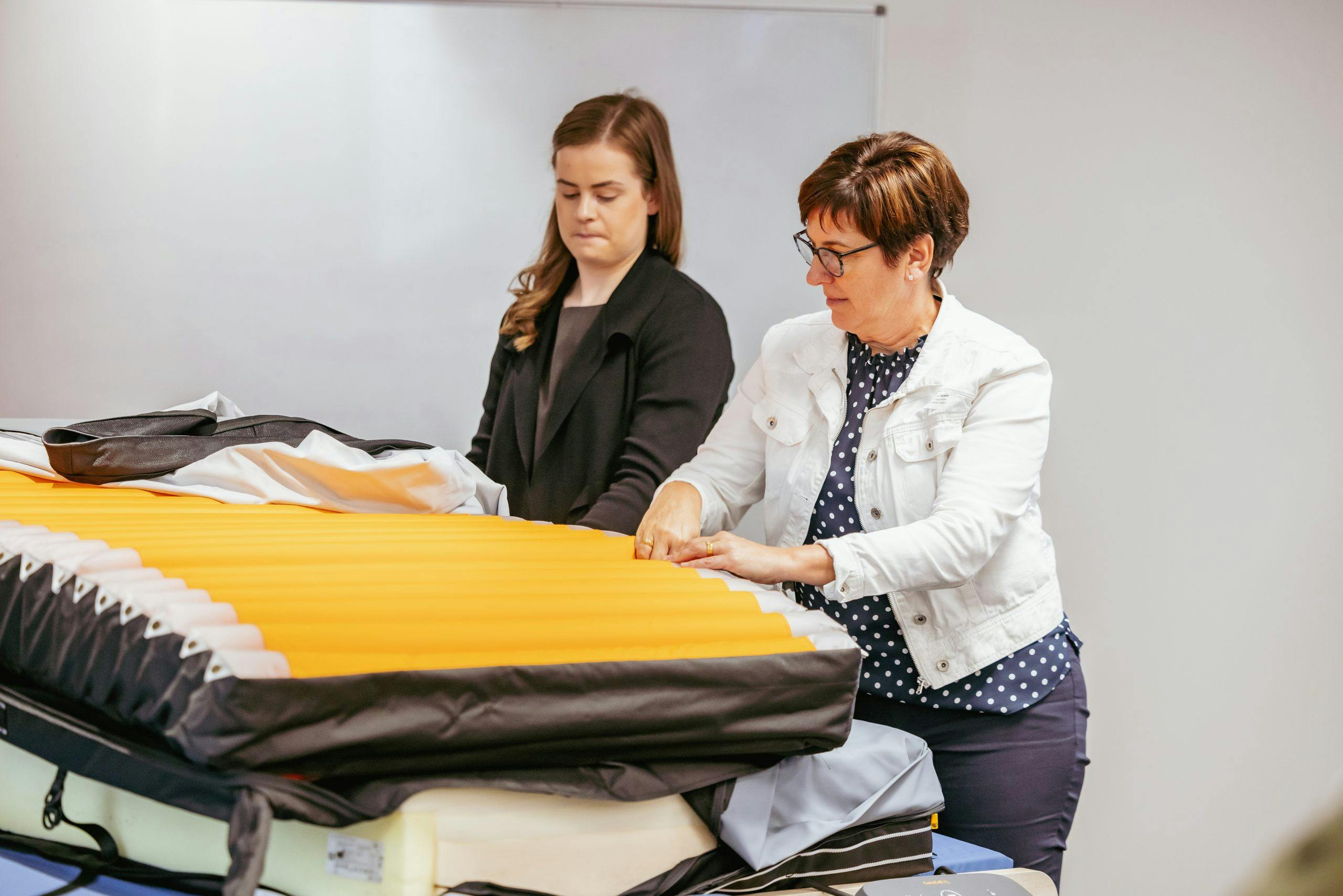
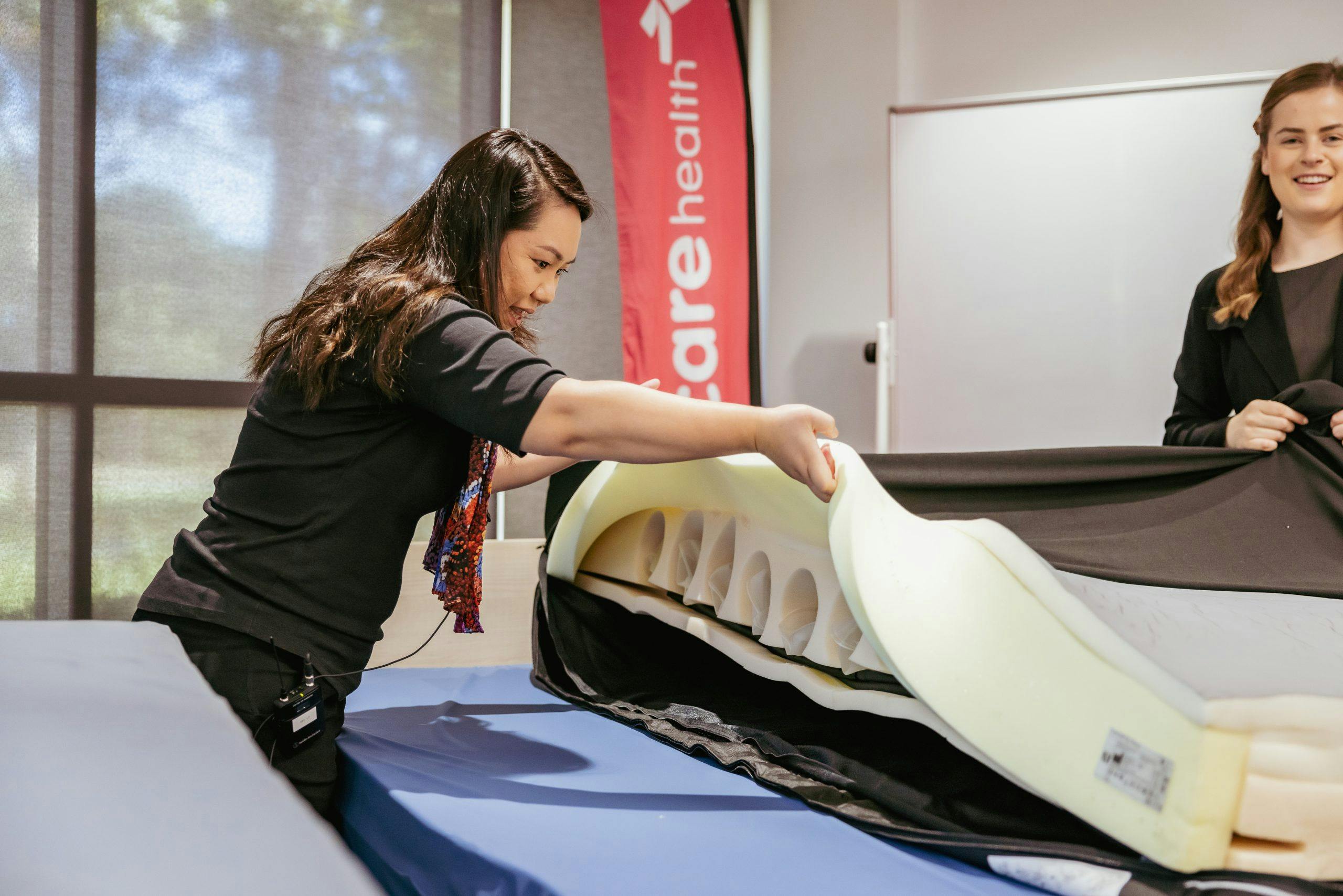
After the break, Ilissa dived deep into our pressure care mattress range.
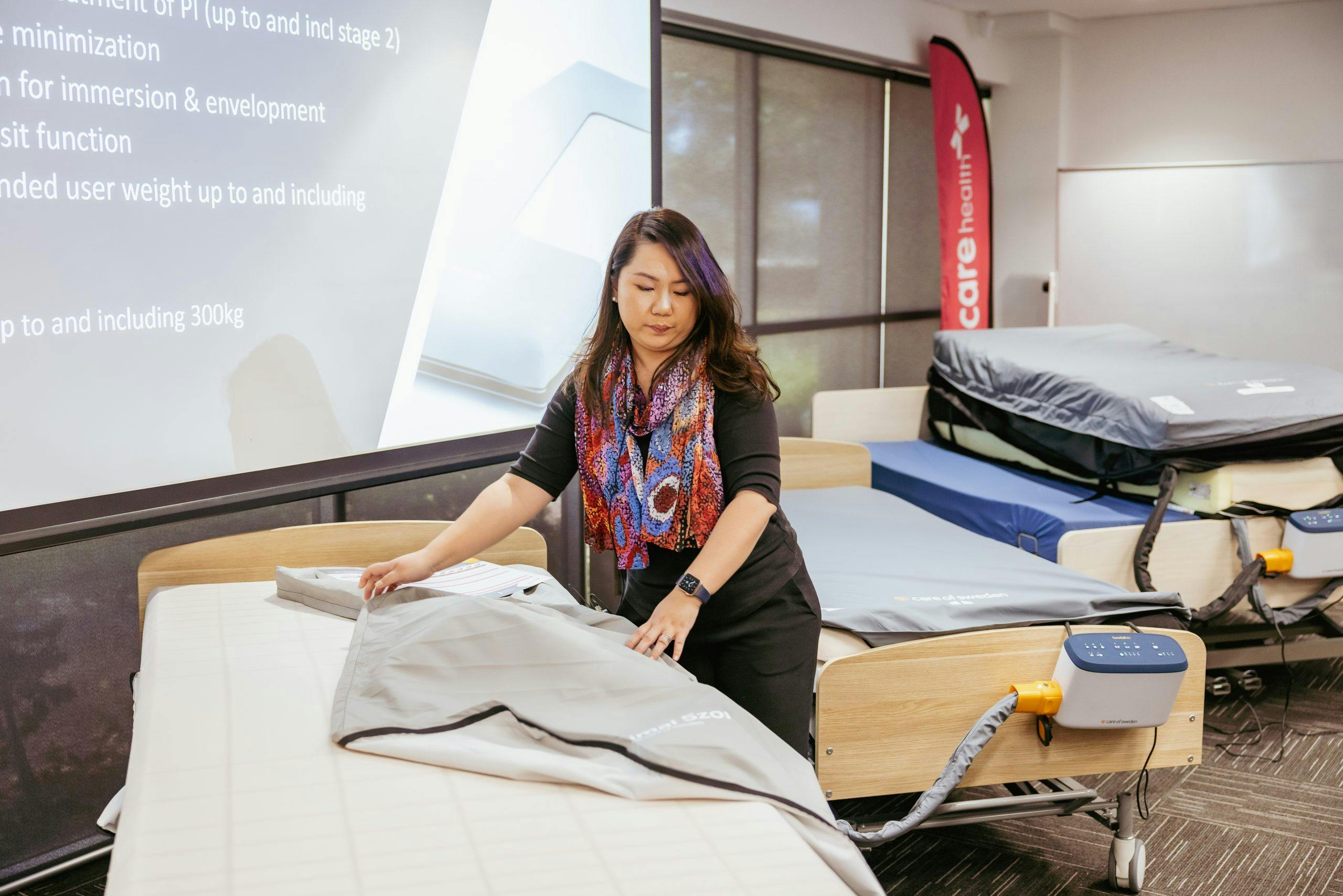
After a run-through of the common terminology used in the support surface world, Ilissa highlighted the essential factors to consider before recommending a mattress to a client.
“What activities does the client do in bed? Is there a reliable power source? What is the client ready to consider?”
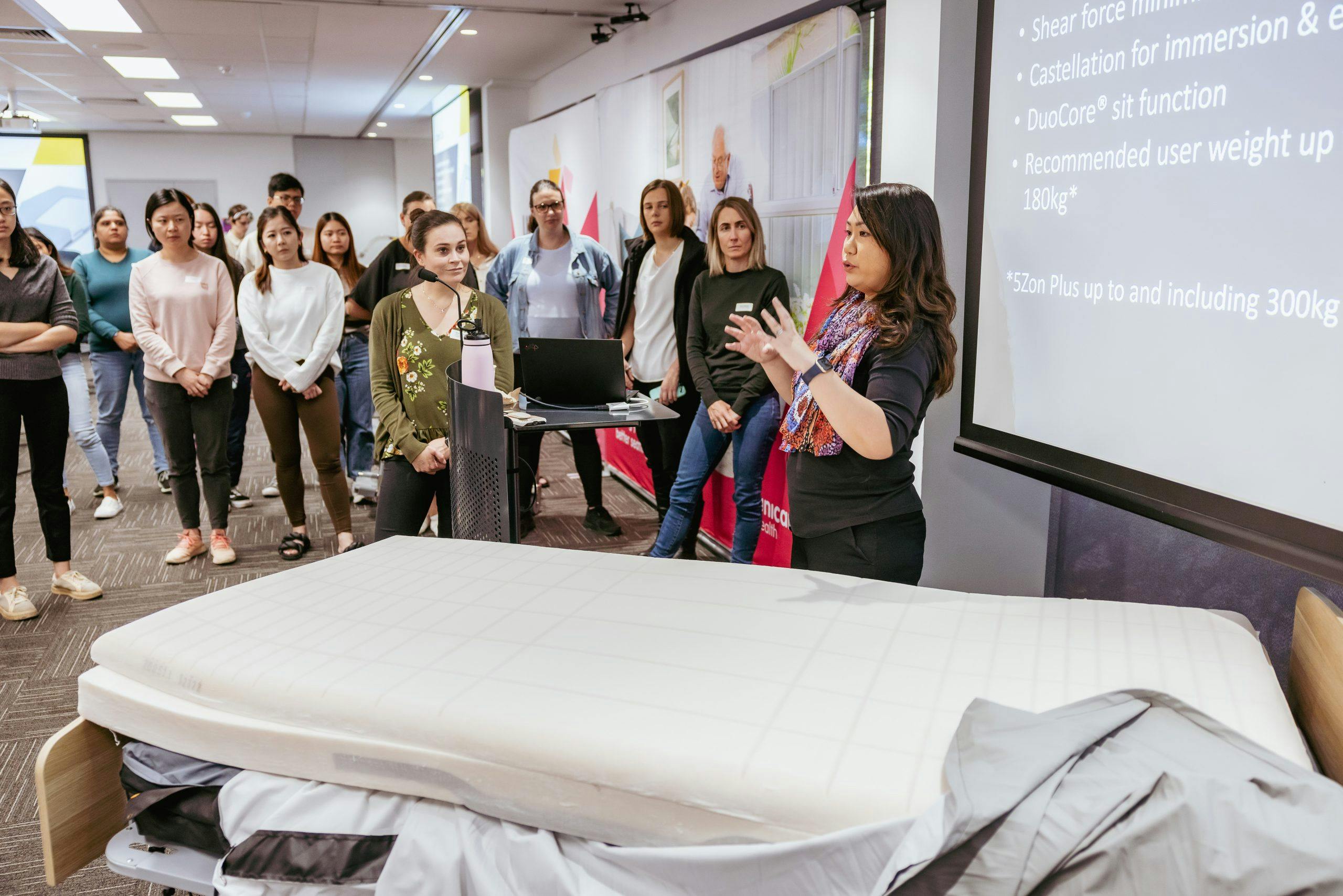
Unicare features a growing selection of mattresses, suiting a range of conditions that address clinical needs as well as comfort.
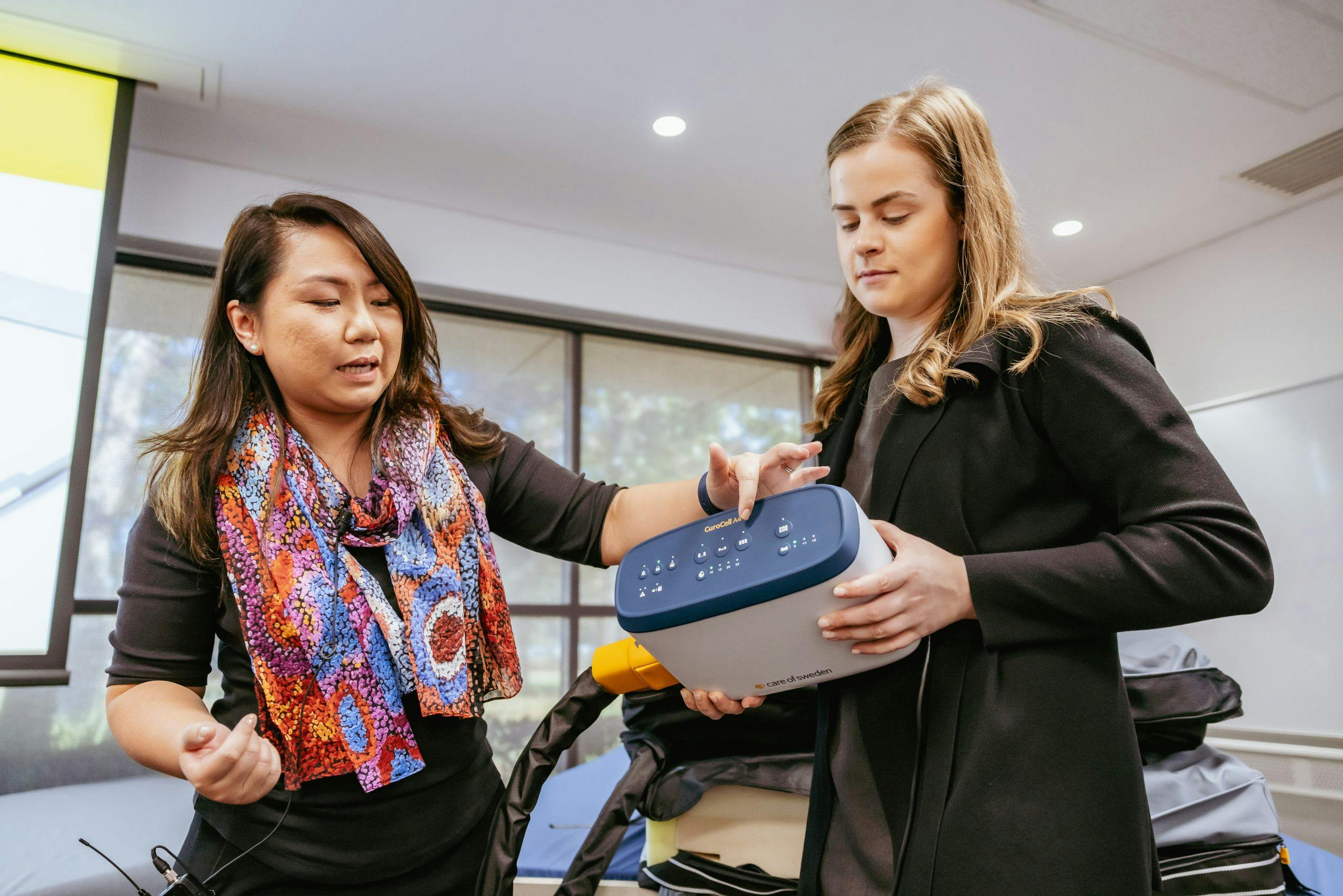
Therapists gathered around as Ilissa and Victoria stripped back the layers of Care of Sweden’s mattresses and demonstrated the user-friendliness of the CuroCell A4 and CuroCell IQ pumps.
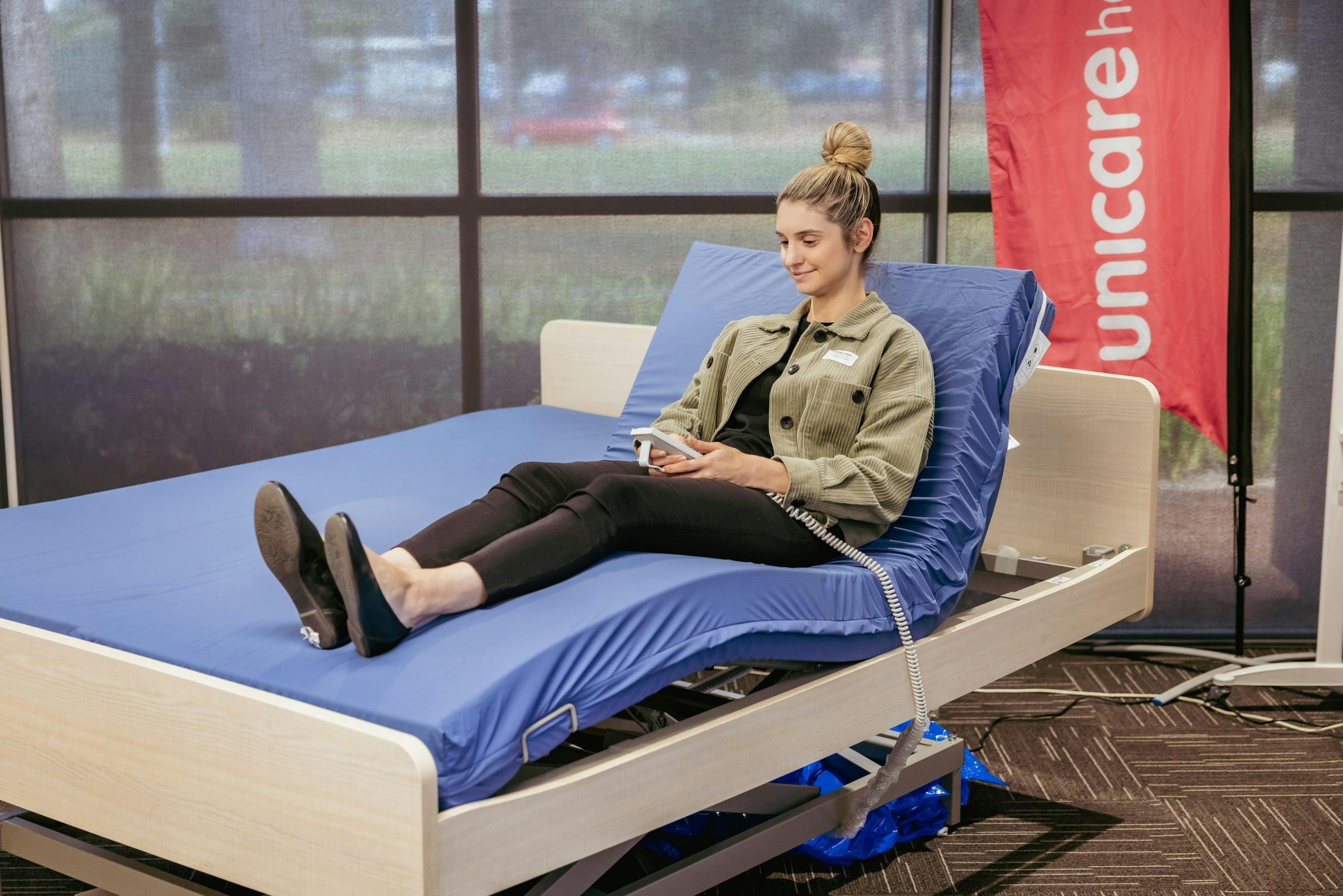
The Split Bed and the Xcel Floorline, two popular nursing care bed choices, were also discussed.
Ilissa addressed the differences between split beds, companion beds and partner beds.
We got therapists up onto beds to help showcase the available features.
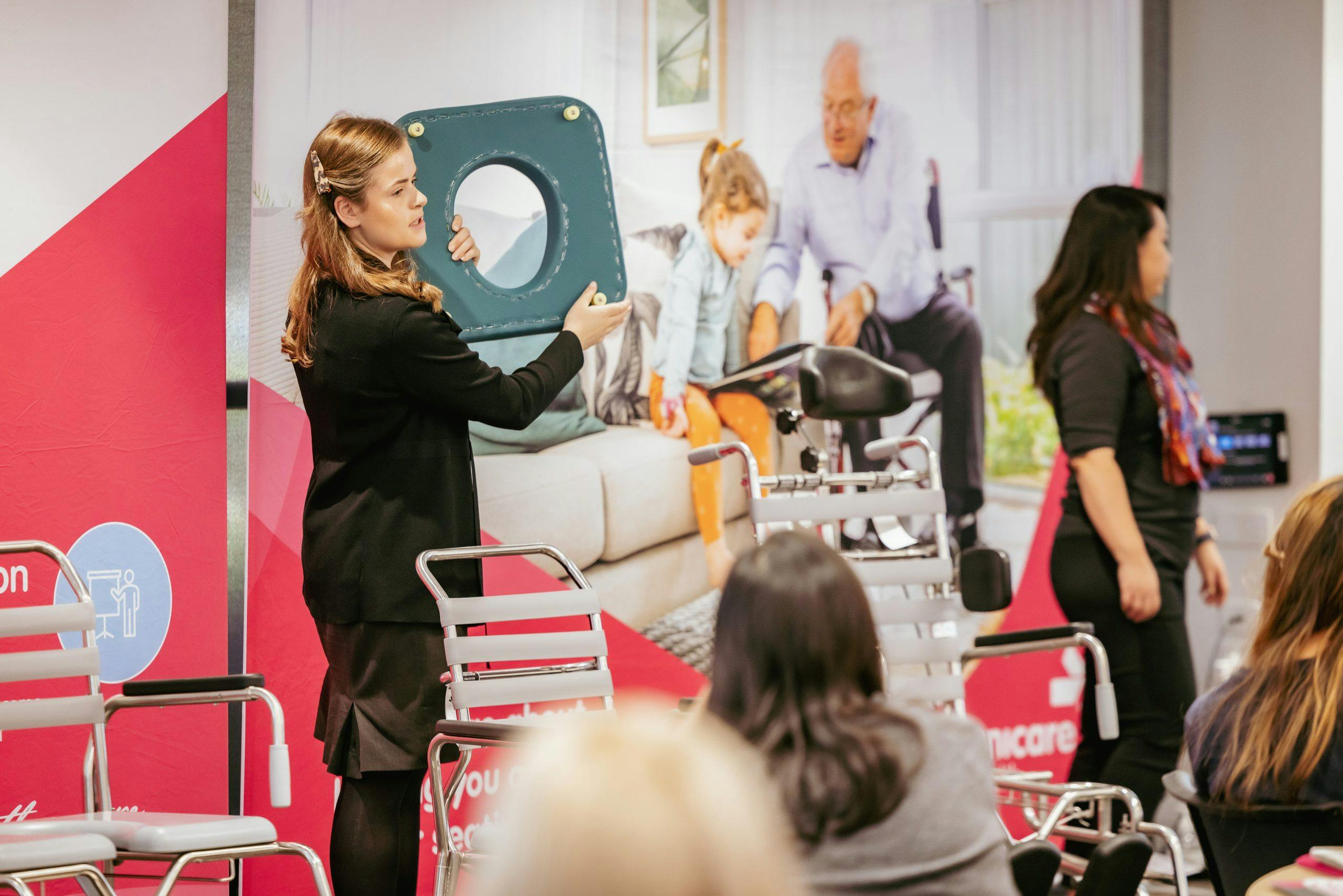
Victoria examined shower commodes using Juvo’s modular range – a sizeable line with endless customisability options and accessories.
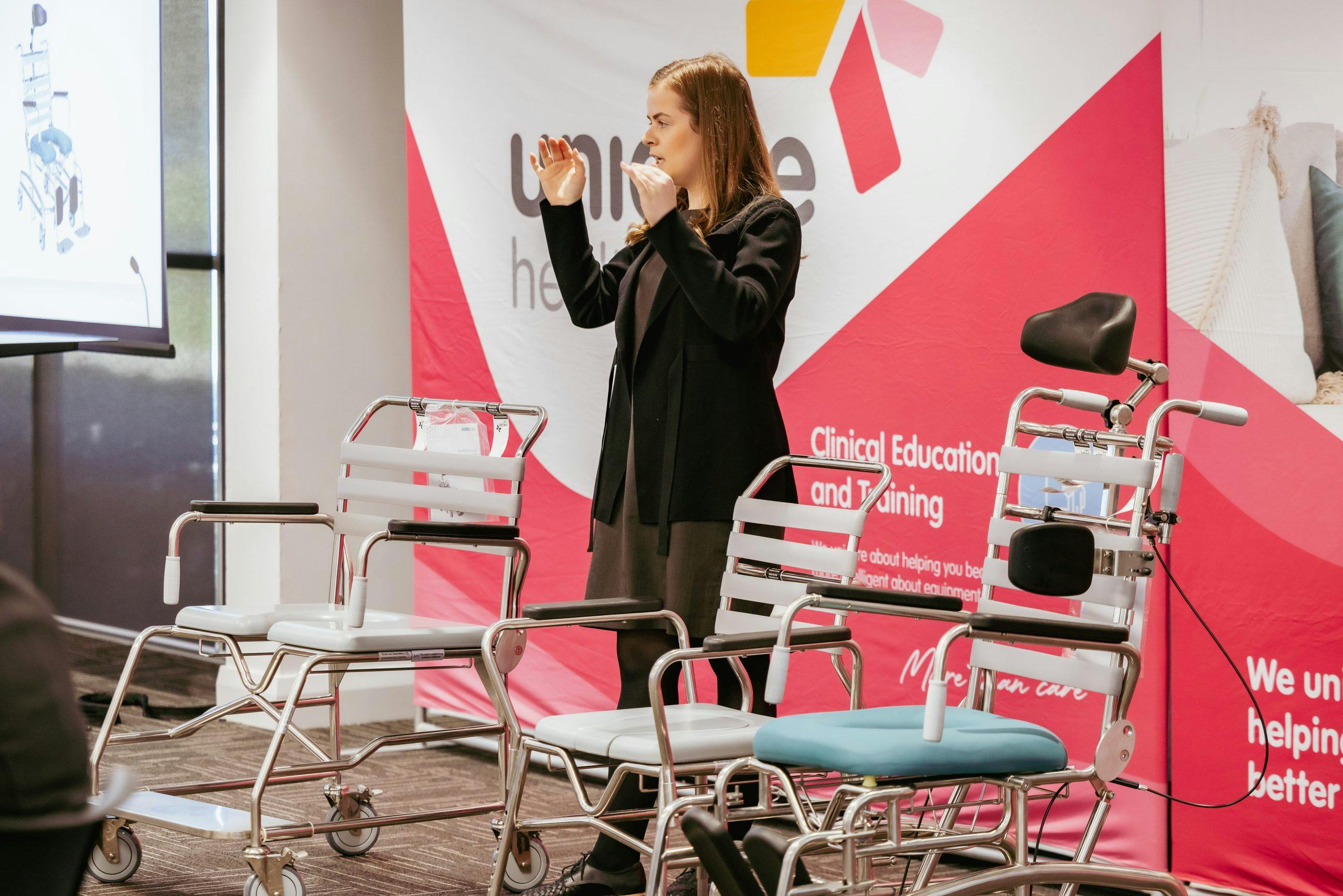
“Each client is unique and has different needs for a shower commode. At Unicare, we recognise that.”
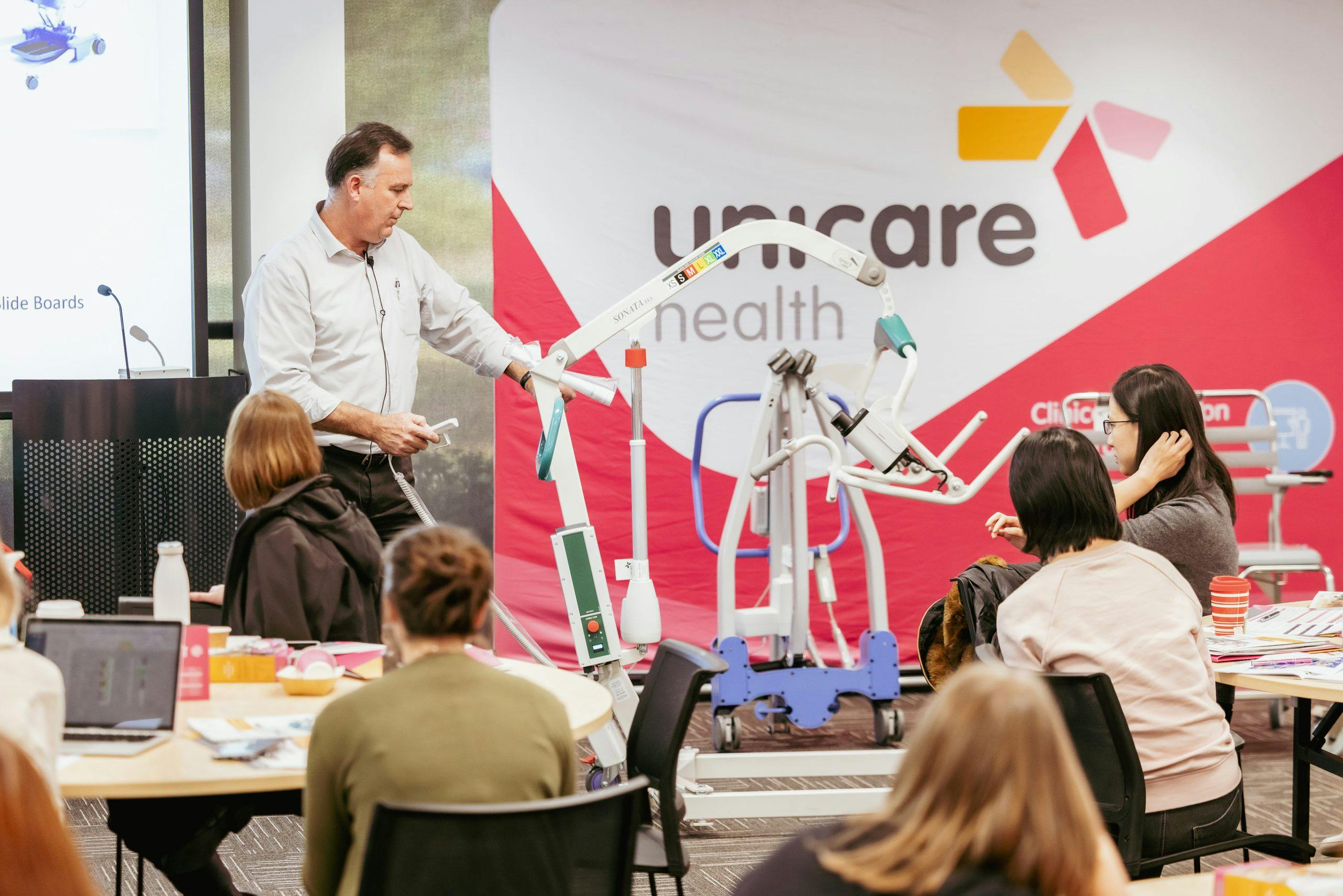
Moving on, Llew shared his experience-backed knowledge of Unicare’s manual handling and patient handling equipment. He used his personal experiences in the community as examples of when various lifting hoists and standing aids would be suitable.
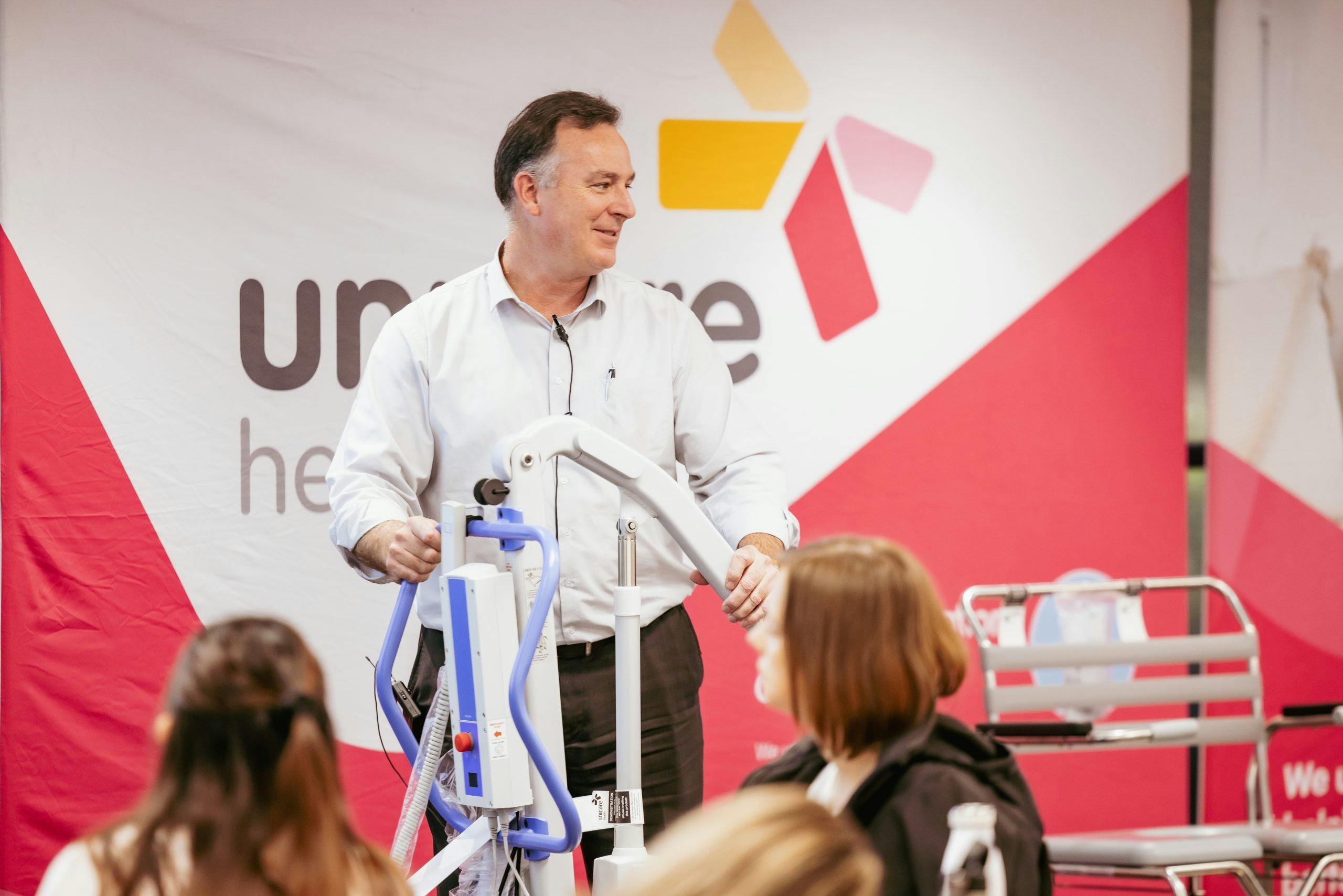
Llew reviewed several transfer aids commonly used in community settings, including the Quickmove, Oxford Advance, Ansa Salsa and Sonata hoists.
Last but not least, Llew showed off the favoured Viva Walker. The Viva Walker is clinical needs without the clinical look. At Unicare, we recognise the need for updating equipment to mesh with modern lifestyles.
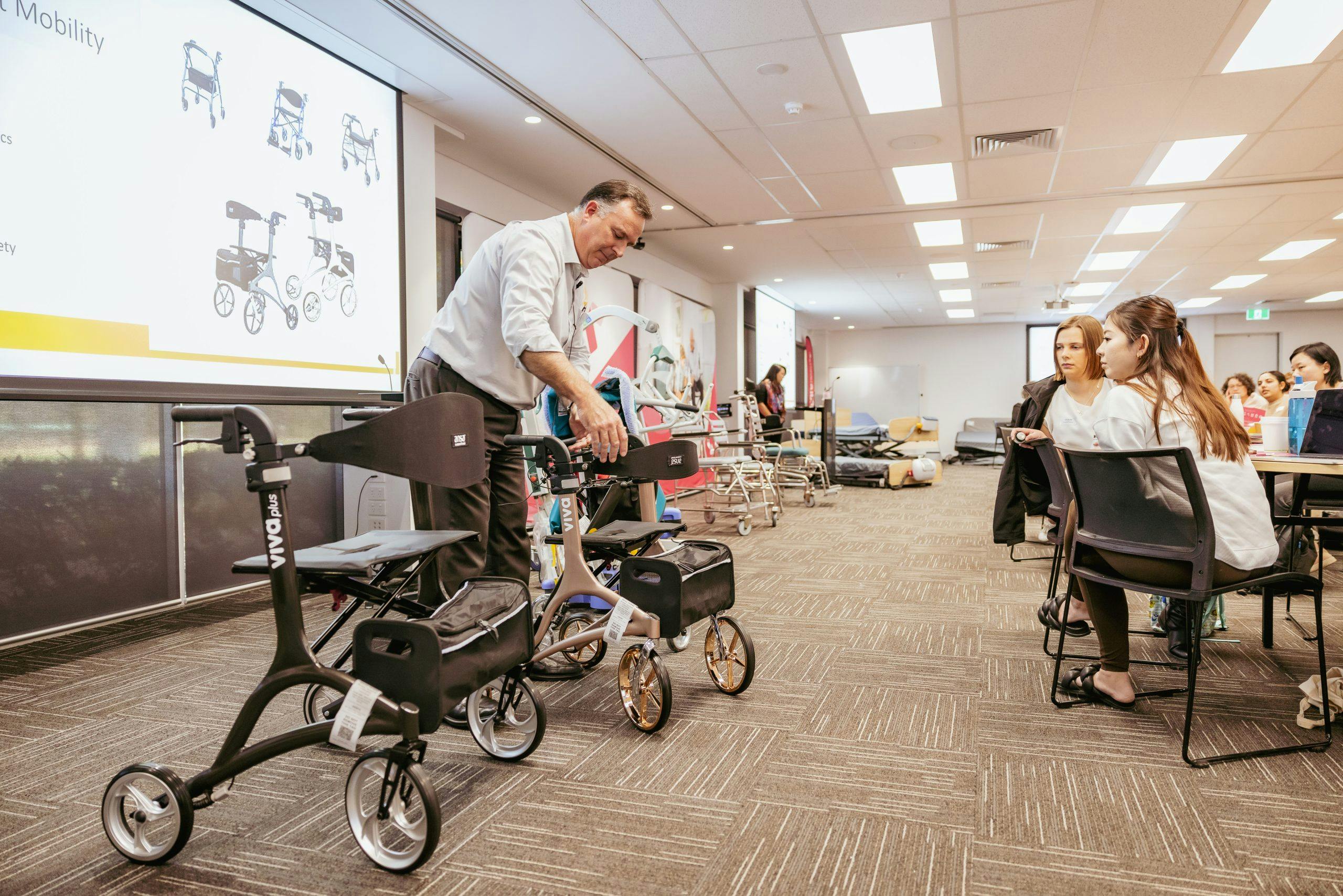
Prescribing assistive technology equipment can sometimes feel like a balancing act involving multiple factors and compromises.
Therapists left this training session feeling more knowledgeable about Assistive Technology for the community, with the key takeaway being that it isn’t always the most expensive option that does the best job. The optimal equipment choice must be determined by an evaluation of individual needs.
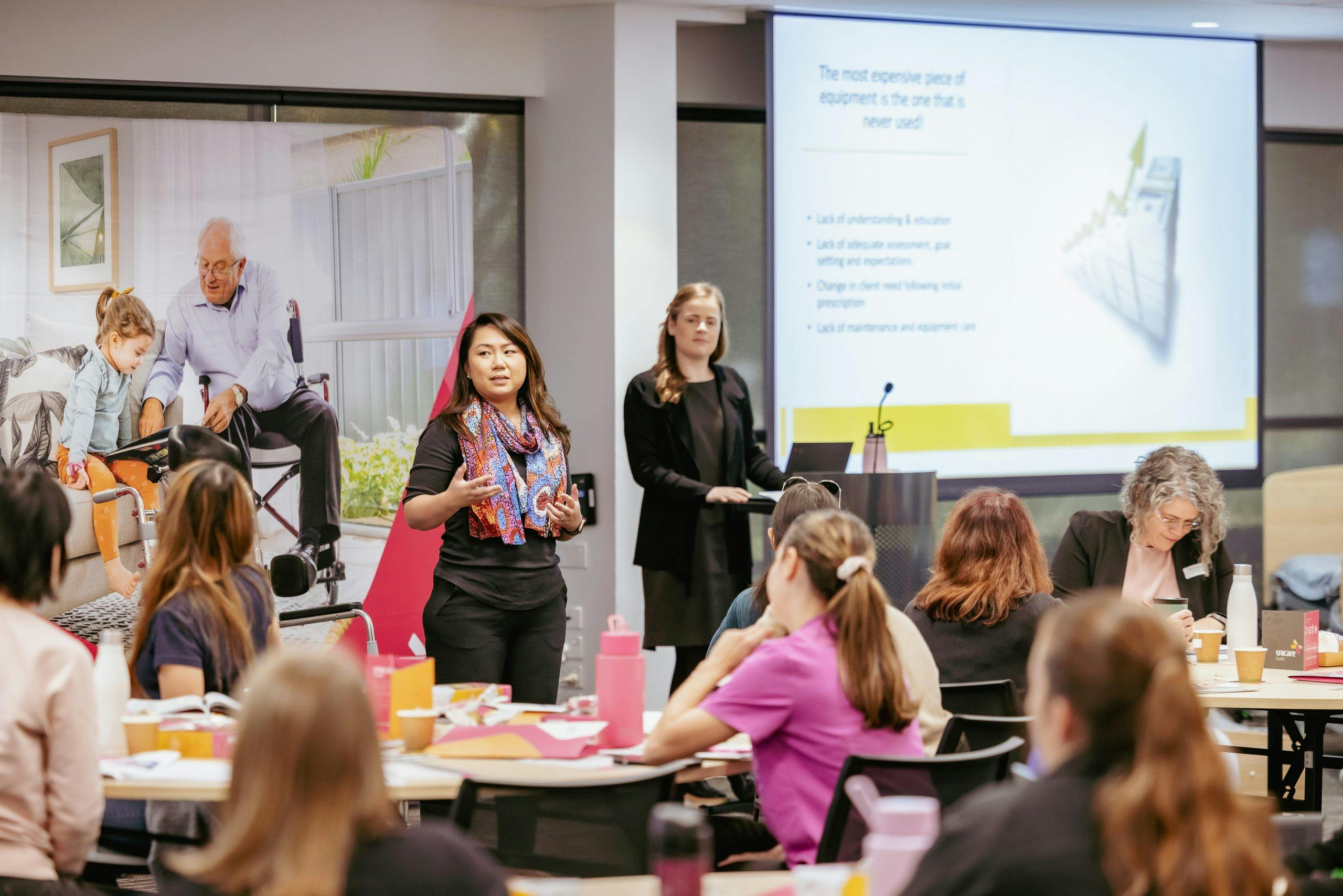
“It isn’t always the $15,000 wheelchair that changes a person’s life. Sometimes, it’s the $50 rail. You can’t put a price on someone’s independence.”
Thank you
Unicare Health wishes to thank everyone who joined us at our Assistive Technology for Community Seminar.
We are passionate about building a community of prescribers who are intelligent about equipment in our quest to improve healthcare outcomes.


